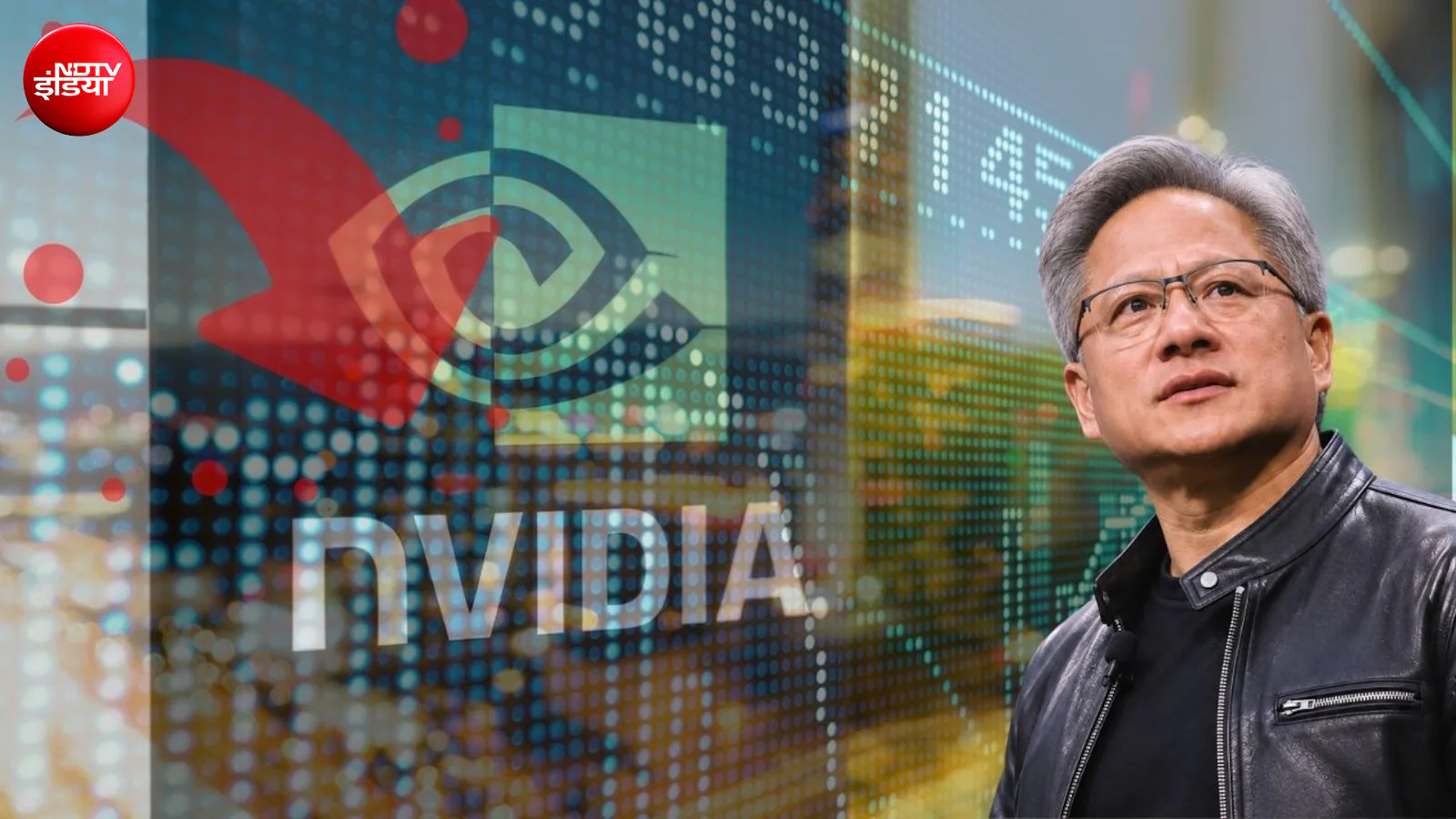

There may be a big fall in the shares of American chip company nVIDIA today, Monday, November 9, and due to this fall, $ 270 billion may be wiped off the company’s market cap. Shares of nVIDIA have seen a decline of more than 5.75 percent during ‘out-of-hours’ trading on Monday.
In after-hours trading on Nvidia-linked perpetual futures on the Hyperliquid platform and Blue Ocean Alternative Trading System (BOATS), the share price was about $175.97, a decline of $10.74 from Friday’s closing price of $186.64 on Nasdaq.
The reason for pressure on nVIDIA shares is being said to be the controversy related to the company’s CEO Jensen Huang. The company’s board has started an independent investigation into this matter.
Why is it a matter of concern for Indians?
If nVIDIA shares crash after the opening of the US market, then this fall may affect Indian investors as well. Especially on those people who have invested money in American tech companies through mutual funds and exchange traded funds (ETFs). The matter of concern is that some Indian ETFs are trading at a premium of up to 51% to their net asset value (NAV). That means investors are buying units by paying much more than the actual value of the assets in the fund.
This is how Indians should understand complete mathematics.
Mirae Asset NYSE FANG+ ETF is an example of this. This ETF includes 10 big American tech companies including nVIDIA. On Monday its price on NSE was Rs 234.91, while on November 6 its NAV was Rs 155.18. That means the ETF was trading at about 51% premium to its NAV.
To understand in simple language, if the actual value of the assets behind one unit of an ETF is Rs 100, but its unit is being sold in the market for Rs 151, then the investor is paying Rs 151 for the asset worth Rs 100. In such a situation, investment starts with an expensive price.
Similarly, nVIDIA also had 8.36% stake in Motilal Oswal Nasdaq 100 ETF. This was the largest holding of the fund. On Monday, the market price of this ETF was Rs 298.59 and NAV was Rs 247.64. That means it was trading at about 21% premium.
nVIDIA has faced big decline before also
This is not the first case of huge fall in nVIDIA shares. In September 2024, the company’s shares fell by 9.5% and its market cap decreased by about $279 billion.
After this, on January 27, 2025, shares of nVIDIA fell by about 17% due to concerns related to Chinese AI company DeepSeek. On that day the market cap of the company had decreased by about 593 billion dollars.
According to reports in the latest controversy, US intelligence officials fear that Jensen Huang may have been targeted through foreign intelligence activities. Questions have also been raised about nVIDIA’s chips reaching China. However, China has termed the allegations of espionage as baseless. The company’s board has also expressed confidence in Huang.
How can Indians be harmed?
The fall in nVIDIA may impact those Indian investors who have stakes in American tech companies in their ETFs. But the risk here is not limited to the fall in the price of nVIDIA shares. Investors who buy ETFs at a premium higher than NAV may face a double blow. This can be understood in three ways
- Fall in nVIDIA shares: The NAV of ETFs in which nVIDIA has a major stake may come under pressure.
- Risk of reduction in premium: If the market price of ETF comes close to NAV, then the investor may suffer loss due to decline in premium apart from the fall of shares.
- Double effect: If both the price of shares and the premium of ETF fall, the price of the investor’s unit in the market may fall faster than the NAV.
What should ETF investors keep in mind?
Before investing in an ETF, it is not enough to just look at its market price or past returns. NDTV Profit quoted experts as saying that investors should also see at what NAV the ETF is available and at what price its units are being bought and sold in the market. If the market price is much higher than the NAV, the investor may have to take the risk of purchasing units at an expensive price. Therefore, before investing, definitely check the difference between NAV and market price i.e. premium or discount.
Source: ndtv.in