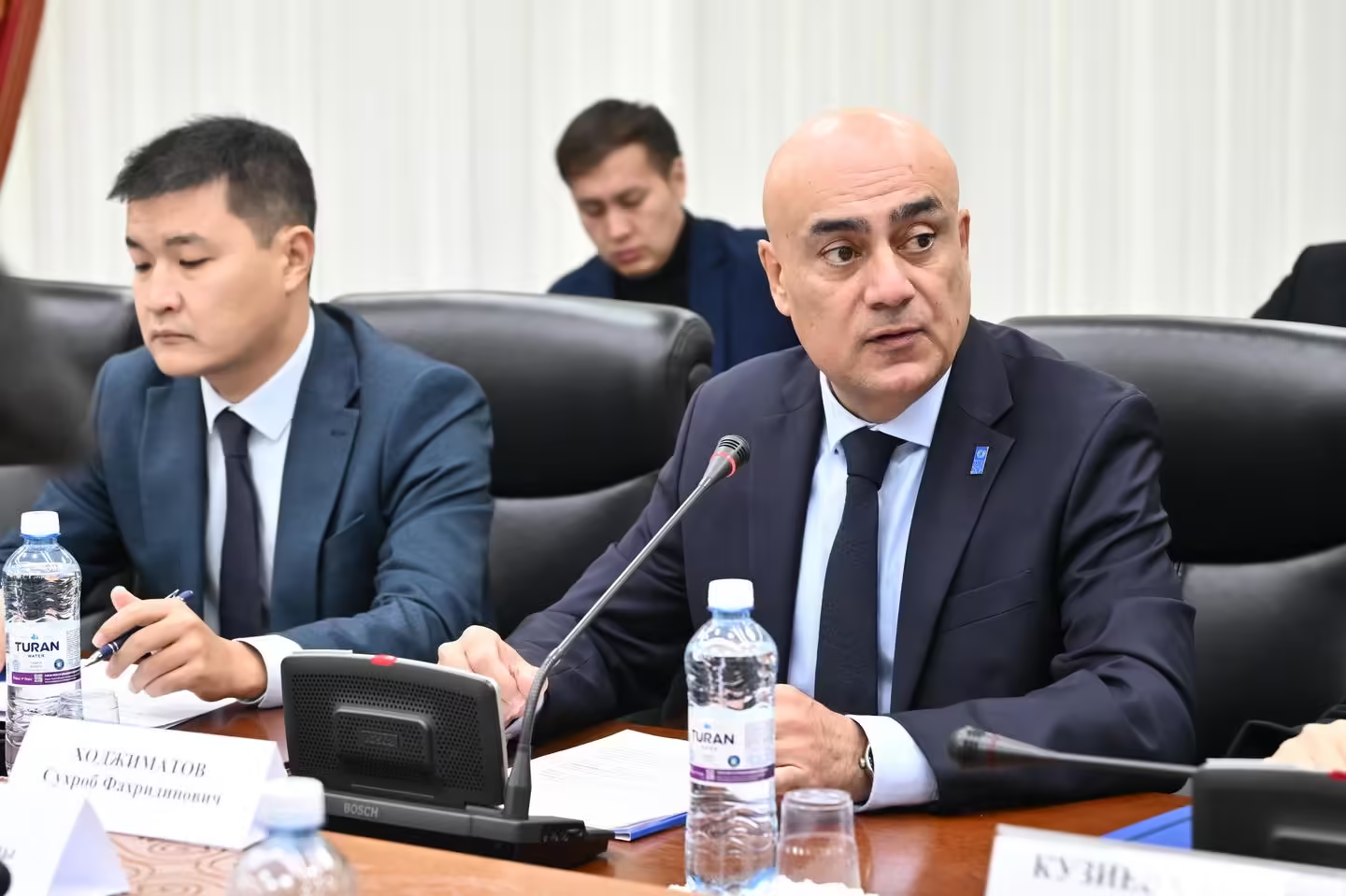

The development of blue finance and measures to attract private investment into Kazakhstan’s water sector were discussed at a meeting of the Committee on Agrarian Issues, Ecology and Natural Resources of the Kurultai of the Republic of Kazakhstan. Following the meeting, recommendations were prepared for the Government, covering the adoption of a national Blue Taxonomy, improvements to legislation and preparations for the country’s first blue bond issuance.
The meeting brought together members of the Kurultai and representatives of government agencies, the Astana International Financial Centre (AIFC), the UN Partnership for Action on Green Economy (PAGE) and the United Nations Development Programme (UNDP).
Attracting investment has become increasingly urgent as the risks of water scarcity grow. According to projections, Kazakhstan could face a water deficit of 12–15 billion cubic metres by 2040.
Meanwhile, the water sector’s annual investment needs are estimated at USD 1–1.5 billion. Funding is needed to modernize water supply and irrigation systems, reduce water losses, introduce water-saving technologies and protect aquatic ecosystems.
“Water is essential to life, food security and economic development. How effectively we manage water resources today will determine the well-being of our people and future generations. Kazakhstan needs to accelerate the modernization of water infrastructure, reduce water losses and introduce modern technologies. This requires additional investment and effective ways to mobilize it,” said Serik Yegizbayev, Chair of the Committee on Agrarian Issues, Ecology and Natural Resources of the Kurultai of the Republic of Kazakhstan.

Photo: Press service of the Kurultai
Blue finance offers one such approach by mobilizing capital for projects that promote the sustainable use and protection of water resources. It includes blue bonds, targeted loans and other financial instruments supporting water infrastructure and environmental projects.
“In his recent State of the Nation Address, President Kassym-Jomart Tokayev emphasized that public funding should help attract private investment and that infrastructure modernization requires new sources of long-term finance. These approaches are equally relevant to the water sector. We need to expand the participation of banks, development institutions and private investors, develop capital markets and create conditions for issuing blue bonds. Kazakhstan has an opportunity to direct additional financial resources towards concrete water security challenges,” said Shynassyl Yernazar, Member of the Kurultai of the Republic of Kazakhstan.
During the meeting, participants were presented with the results of UNDP’s work to develop the blue finance market, undertaken with national and international partners through the Partnership for Action on Green Economy (PAGE).
A national Blue Taxonomy and Guidelines for Blue Bond Issuance are currently being developed. The taxonomy will define project categories and the criteria for assessing their alignment with sustainable finance principles. Together, these documents will help establish clear rules for issuers and investors and promote transparency in the use of proceeds.
Mansur Oshurbayev, Vice Minister of Ecology and Natural Resources of the Republic of Kazakhstan, and Zhandos Salimov, Vice Minister of Water Resources and Irrigation of the Republic of Kazakhstan, also took part in the discussion and highlighted the need to further develop blue finance instruments.
Participants emphasized the importance of cooperation among government agencies, including the Ministry of Agriculture and the Ministry of Industry and Construction, as potential blue projects span several sectors of the economy, including water supply and sanitation, irrigation, industrial water use and the protection of aquatic ecosystems.
UNDP supports Kazakhstan in improving water resources management, strengthening resilience to climate change and advancing sustainable finance. Ongoing initiatives include projects focused on adaptation to declining Caspian Sea levels, flood risk management, sustainable irrigation and climate-resilient water sector development.
“Many water projects require substantial upfront investment and have long payback periods, which can make it difficult to attract private capital. Blue finance can help address this challenge. Together with our partners, we are developing clear criteria for these projects and preparing instruments that can mobilize long-term financing. Kazakhstan already has experience in green finance, and we can now build on that experience to address water security challenges,” said Sukhrob Khodjimatov, UNDP Deputy Resident Representative in Kazakhstan.

Photo: Press service of the Kurultai
Following the meeting, recommendations were prepared for submission to the Government of the Republic of Kazakhstan. They include a proposal to designate a government agency responsible for coordinating blue finance development, adopt the Blue Taxonomy, improve the regulatory framework, develop a pipeline of priority projects and prepare Kazakhstan’s first blue bond issuance.
Participants also focused on expanding access to government support instruments and creating conditions for state-owned and quasi-public entities to issue blue bonds.
UNDP and the UN Partnership for Action on Green Economy (PAGE) will continue providing expert and technical support to the Government of Kazakhstan and national partners in developing the blue finance market, mobilizing investment and implementing projects that promote sustainable water resources management.
Source: www.undp.org