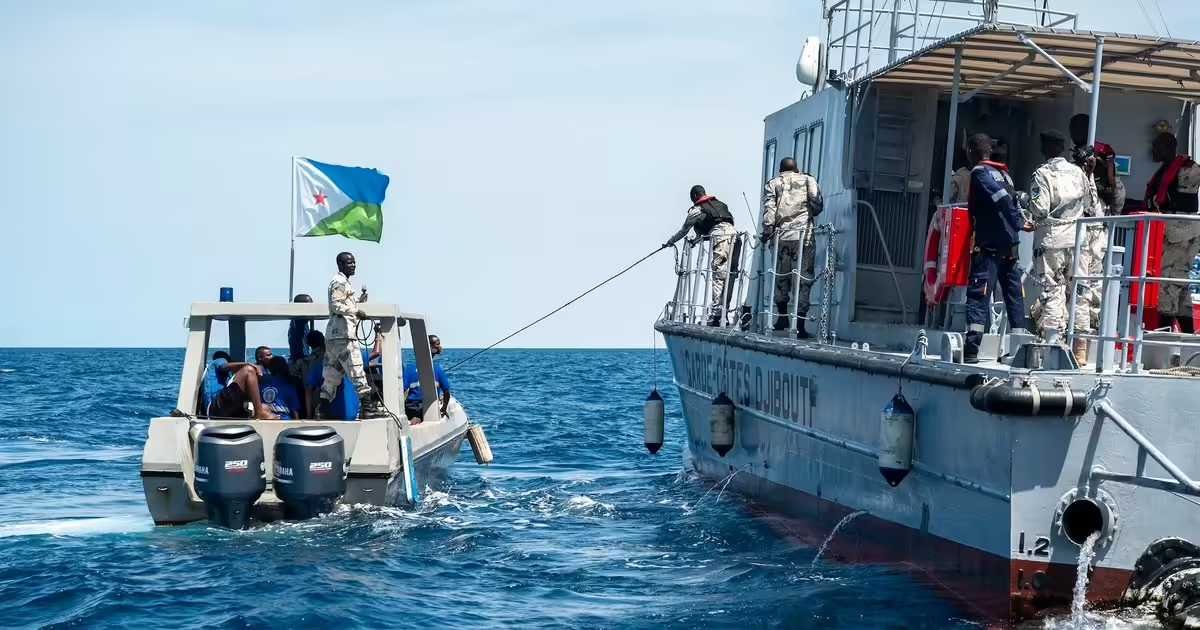

The exercise, known as Bull Shark, brought together the United States – the world’s strongest military, according to the 2026 Global Firepower ranking, alongside France, Japan, Italy, and Spain in Djibouti. Their presence reflects Djibouti’s importance to international security operations and the protection of vital maritime routes.
China’s absence is particularly notable given its military presence in the country. Beijing established its first and only officially acknowledged overseas military base in Djibouti in 2017, placing its forces just a few miles from the US military installation at Camp Lemonnier.
According to the US Africa Command (AFRICOM), participants conducted crisis response, personnel recovery and security operations across air, land and sea domains.
In a statement on November 8, the US Africa Command (AFRICOM) said the forces recently participated in Exercise Bull Shark in Djibouti, conducting crisis response, personnel recovery and security operations across air, land and sea domains.
As a multinational exercise, Bull Shark integrates air, land and maritime operations, allowing participating forces to coordinate in dynamic environments and respond to potential crises.
It also strengthens cooperation among military partners based in Djibouti, reinforcing their ability to act collectively in support of regional stability and security.
China’s presence draws US interest
Djibouti’s military importance has placed it at the centre of growing strategic competition between Washington and Beijing. The United States and China operate military bases just a few miles apart in the country, giving both powers access to one of the world’s most important maritime corridors.
China’s presence has attracted particular attention in Washington, with the US Congressional Research Service describing Djibouti as a frontline of American strategic competition with Beijing.
A September 2026 assessment by the Center for Strategic and International Studies found that Beijing had upgraded its Djibouti base with new communications and satellite equipment, potentially strengthening its ability to monitor military activities across Africa and the Middle East.
Why major powers maintain military bases in Djibouti
The concentration of military forces in Djibouti is largely explained by geography. Djibouti sits beside the Bab el-Mandeb Strait, a narrow maritime passage connecting the Red Sea to the Gulf of Aden and the Indian Ocean. The route links shipping lanes leading towards the Suez Canal with trade routes between Europe, Asia and the Middle East.
The location also places military forces within reach of conflict zones and security threats in Yemen, Somalia and the wider Red Sea region. Foreign bases support counterterrorism missions, anti-piracy operations, maritime security, logistics and rapid responses to regional crises.
For Djibouti, hosting these installations also delivers economic benefits. The Congressional Research Service identifies payments from foreign military facilities as an important source of government revenue, alongside income from the country’s ports.
As competition between Washington and Beijing intensifies, Djibouti’s coastline has become an increasingly valuable strategic asset, putting several major military powers within close proximity of one another.
Source: africa.businessinsider.com