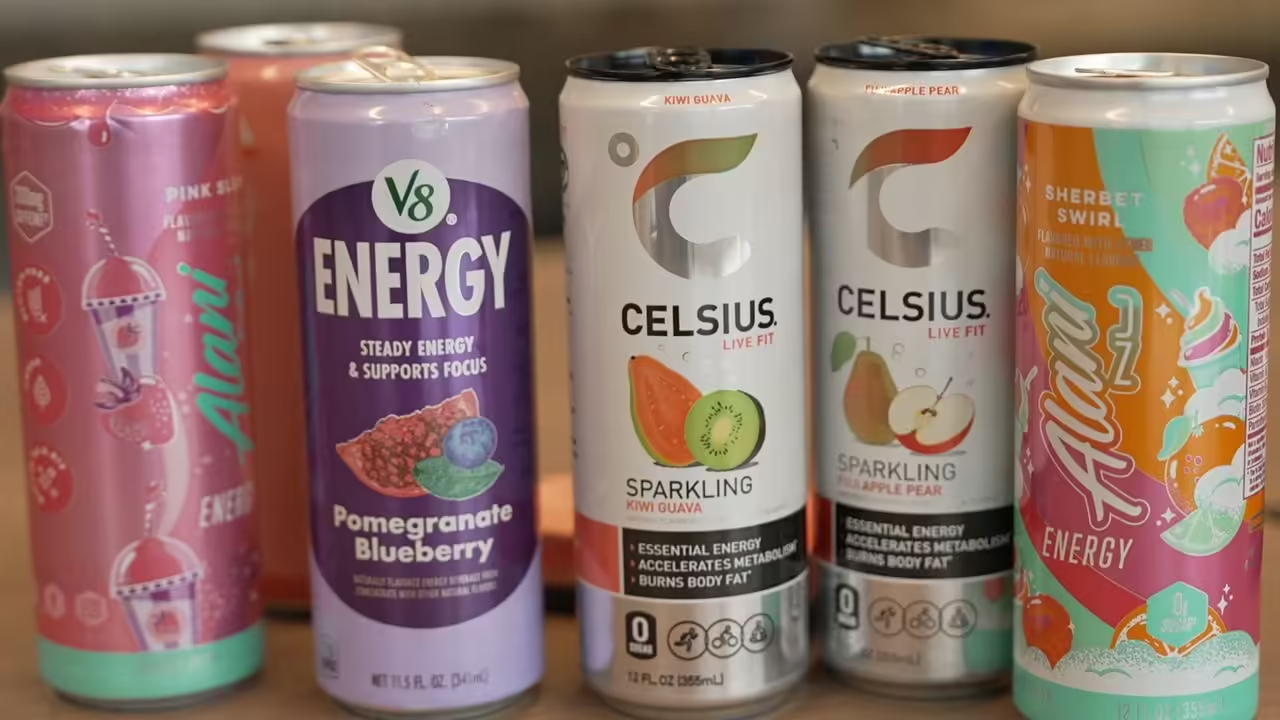

The Food and Drug Administration is weighing new labeling recommendations for caffeine content in drinks. About 90% of adults in the United States drink caffeine every day, according to the Mayo Clinic.
The FDA does not currently require companies to disclose how much caffeine is in a beverage unless it is added as a standalone ingredient. But the agency could tighten the guidelines as it considers new labeling recommendations this year.
Many energy drink companies already disclose how much caffeine is in their drinks. The American Beverage Association, which includes most major energy drink companies, agreed to “voluntarily and completely display the total quantity of caffeine in each beverage” they sell.
Rob van Dam, who studies caffeine at The George Washington University, said it’s hard for people to monitor how much caffeine they consume.
“If it is labeled, we don’t know for certain whether that’s really correct. There’s nobody really checking if that amount of caffeine is really in there,” van Dam said. “Across the board, I think there should be clarity about the amount of caffeine in these beverages because it’s very variable.”
The maximum safe daily amount of caffeine for adults is 400 mg, the amount in four 8-ounce cups of coffee. The makers of several energy drinks, including Celsius, C4 and Alani Nu, disclose their beverages have 200 mg of caffeine, or half of the daily maximum, in one can.
Almost a third of teens say they consume energy drinks regularly, according to the National Institutes of Health. The American Academy of Pediatrics recommends teens between the ages of 12 and 18 do not consume energy drinks and avoid consuming more than 100 mg of caffeine per day. Van Dam said it’s especially important for teens to be cautious because their bodies process caffeine differently.
“I think there may be a bit of a tendency to think of caffeine as something that everybody uses that’s quite innocuous because we all have some coffee or tea or soda sometimes with caffeine, and it makes us perhaps underestimate how serious the effects can be of excess caffeine intake,” van Dam said.
The family of 17-year-old Larissa Rodriguez believes energy drinks were to blame for her death last year.
“She was a wonderful student, active in many areas of her high school… student council, cheerleading, tennis,” said Benny Agosto Jr., the attorney for the Rodriguez family.
The Texas teen had been drinking at least one energy drink per day. Agosto said she died of an enlarged heart, due to stress and large amounts of caffeine. Rodriguez’s family filed a wrongful death lawsuit against an energy drink distributor.
“The FDA gives them a blank check. They can do whatever they want,” said Agosto. “You go from product to product, they’re all different. But what we know is they’re not regulated. Nobody’s watching over them.”
Rodriguez’s family said they’re “very encouraged” to see the FDA considering stricter labeling requirements but also want companies to lower their drinks’ caffeine content and specify the drinks may cause heart problems.
Alani Nu, the energy drink named in the lawsuit, did not respond to Spectrum News’ request for comment.
The American Beverage Association did not say whether it would support new labeling recommendations from the FDA.
Legislation has been introduced in Congress to require companies to disclose caffeine content in drinks, but it hasn’t gone anywhere yet.
Caffeine labeling was added to the FDA’s list of regulatory priorities this summer. The Department of Health and Human Services said in a statement, “The guidance is intended to help consumers make informed decisions about their caffeine consumption, particularly as caffeine appears in a range of food and beverage products.”
The FDA’s new guidelines are expected to be released by the end of the year. While not legally enforceable, the guidelines signify a first step toward regulating caffeine in beverages.
Source: spectrumlocalnews.com