
By Ajong Mbapndah L*
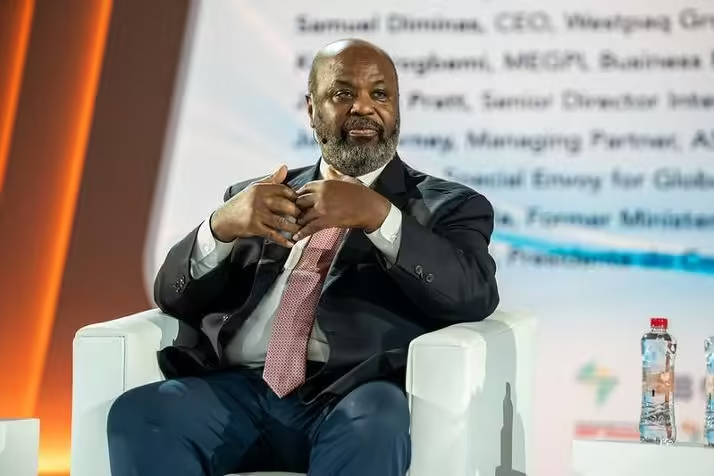
Africa’s energy sector is entering a defining period, and American investors who continue to approach the continent with excessive caution risk surrendering some of the world’s most promising opportunities to competitors. That is the unmistakable message from Jude Kearney, Managing Partner at ASAFO & Co. (US) LLP, who believes Africa’s growing importance to global energy security, industrial development and investment makes it increasingly difficult for serious international players to remain on the sidelines.
A seasoned legal and investment professional with decades of experience navigating the complexities of U.S.–Africa commercial relations, Kearney has been a consistent voice for stronger partnerships, practical investment frameworks and greater recognition of Africa’s economic potential. Having participated in all six editions of African Energy Week (AEW), he has witnessed firsthand the transformation of the Cape Town gathering from an emerging industry platform into one of the continent’s most influential meeting places for energy investors, policymakers and corporate leaders.
For Kearney, AEW 2026 represented a significant turning point. With more than 12,000 participants, over 300 VIPs and ministers, and billions of dollars in reported investment commitments and deal-making, the event demonstrated the growing determination of African governments and international investors to move beyond declarations of intent. Equally encouraging was the increasingly purposeful American presence, with senior U.S. government officials, established energy companies, independent operators and financial institutions showing greater interest in translating opportunities into commercial partnerships.
Yet Kearney is equally clear about the obstacles that must be overcome. Regulatory predictability, transparent licensing, credible local partnerships, financing mechanisms and faster project approvals remain essential to attracting sustained investment. He also challenges American companies to abandon outdated perceptions that treat Africa as a single investment risk, warning that hesitation could prove more costly than carefully structured participation in the continent’s expanding energy markets.
In this exclusive interview with Pan African Visions, Kearney offers a candid assessment of AEW 2026, the Trump administration’s commercially driven approach to Africa, and the steps Washington must take to strengthen its competitive position. He also examines the leadership of African Energy Chamber Executive Chairman NJ Ayuk, the importance of meaningful local content and the growing opportunities in natural gas, LNG, power generation and integrated energy infrastructure.
Looking toward AEW 2027, Kearney insists that the ultimate measure of success will not be the size of investment announcements but the number of projects reaching final investment decisions, creating jobs and delivering tangible economic benefits. His message to American investors is unmistakable: Africa’s energy transformation is gathering momentum, and those who fail to engage seriously today may find themselves struggling to catch up tomorrow.
Having participated in all six editions of African Energy Week, how would you assess AEW 2026, and what stands out most about the event’s evolution into a major platform for African energy investment and partnerships?
AEW 2026 was, by virtually every metric, a banner year for the conference and a historic landmark for the African energy sector. Convening over 12,000 participants, more than 300 VIPs and ministers, and delegations from scores of foreign jurisdictions, the event demonstrated how indispensable this gathering has become to global energy discourse. What stood out most was not merely the sheer volume of attendees, but the palpable shift in posture: participants arrived with a deliberate, sharp focus on conducting business among themselves and saying “yes” to opportunities where possible.
As I understand it, owners and sponsors of energy projects secured billions of dollars in total investment commitments and deal-making, with 15 major African energy projects formally pitched to global investors, AEW 2026 proved that it has evolved from a policy discussion into a highly consequential meeting place for deal-making. The atmosphere was vibrant and highly interactive from the very beginning—starting with CLG’s welcoming reception on the Waterfront and the Just Energy Transition concert—straight through to the final technical and financial sessions. It was an extraordinary week that solidified AEW’s position as an African-led, outcome-driven global platform.
You were an active participant, as usual, in the discussions during AEW 2026. Which panels or sessions did you find particularly significant, and what key messages should industry leaders and policymakers take away?
While it is literally not possible to attend each panel discussion, keynote speech or plenary session, I was again able to sit in (or participate in) some vital discussions on public and private sector commitments to expanding the opportunities for investors to participate in the orderly extraction and trading of the continent’s natural resources, as well as conversations about further on-shore refinement and beneficiation of the raw materials produced in Africa. This conference likewise gave me the chance to continue to participate in and absorb the ever-evolving and improving mechanisms for meaningful local and national content in producing countries, an issue that is among the highest priorities in these extractive sectors. Those topics were very actively discussed—actually the content of the discussions were substantially expanded from prior years—this time around and there is progress along those lines for all to see. (Which is NOT to say “our work here is done” in regards to any one of those issues…indeed, I will and my colleagues at the African Energy Chamber will continue to offer our voices and experiences to the effort to perpetually seek improvements in these sectors overall.)
I also want to make a few specific points regarding one panel I served on. I’m speaking of the U.S.–Africa Energy & Investment Forum, where we drilled down (no pun intended, actually) to examine specific, concrete mechanisms to deepen commercial ties within countries and within regions/corridors so as to better enable and attract capital flow. One key message throughout these sessions (including from me personally) was that investors and host nations must focus on bankability, risk mitigation, and execution speed. Policymakers should become comfortable with the fact that capital flows toward predictability (and of course return), while industry leaders should take notice from the discussions and project data on display at conferences like AEW tend to support the this new reality: Africa is no longer just a margin option—it is essential to global energy resilience.
American participation in Africa’s energy sector remains relatively cautious despite the continent’s enormous potential. What did you observe about the American presence at AEW 2026, and what does it tell you about current U.S. investor appetite for African energy opportunities?
The American presence at AEW 2026 was both substantial and noticeably more action-oriented than in prior years. Rather than sending purely diplomatic or exploratory delegations, the U.S. Government sent senior officials with active, concrete authority to advance projects—including representatives from the U.S. Department of Energy, the U.S. International Development Finance Corporation (DFC), and ambassadorial leadership.
Alongside established American majors like ExxonMobil, Chevron, and ConocoPhillips, we observed a growing contingent of U.S. independent operators, service providers, and technology firms actively negotiating partnerships. This signals that U.S. investor appetite is evolving beyond tentative curiosity into a strategic realization that missing out on Africa’s hydrocarbon, LNG, power, and critical mineral developments poses a direct threat to long-term commercial competitiveness.

Drawing on your extensive experience in U.S.–Africa energy relations, what will it take to secure stronger participation from American companies, investors and financial institutions in Africa’s oil, gas and broader energy industries?
Securing deeper American participation has been a quiet part of my work in Africa for literally decades—even as my primary obligations related to assisting the sovereign sector or private sector client who brought me to the respective projects in Africa I’ve worked on. What I have long understood is that making a decision to invest in/transact business in jurisdictions where you have limited experience and sometimes limited data is not an overnight decision. But a serious study of the transactions/investment metrics and experiences in African countries of late helps one to understand that it is entirely possible to close the gap between potential projects and bankable transactions. U.S. capital is subject to strict regulatory, compliance, and fiduciary standards. To attract these institutions, African host jurisdictions must offer—and are increasingly offering—regulatory predictability, transparent licensing, enforceable contractual frameworks, and clear pathways for profit repatriation.
Simultaneously, American and other foreign investors must abandon outdated, blanket risk assessments of the continent and recognize that individual African nations offer highly sophisticated investment environments. When projects are structured with strong local partnerships, risk-mitigation instruments from institutions like Afreximbank or the DFC, and clear alignment between export revenue and local energy additions, American financial institutions can and will commit at scale.
What would you say directly to American energy companies that remain hesitant about investing in Africa, particularly those concerned about political risks, regulatory uncertainty, financing challenges and the overall investment climate?
I would tell them directly: do not view Africa as a monolith of risk, because doing so causes you to miss some of the most lucrative and transformational energy plays in the world. Political and regulatory environments across Africa’s 54 nations vary widely, and many jurisdictions have instituted modern, highly competitive petroleum and investment codes specifically designed to protect international capital.
While political risk and financing hurdles are real, they are manageable through proper deal structuring, strategic local counsel, and joint ventures with experienced indigenous partners. The risk of sitting on the sidelines while European, Asian, and Middle Eastern competitors lock in long-term concessions and strategic mineral supply chains is ultimately a far greater commercial risk for American firms.
How do you assess the Trump administration’s approach to Africa’s energy sector so far, and what implications do its energy, trade and foreign investment policies have for American companies seeking opportunities on the continent?
Ajong—you enjoy throwing me in the deep end with some of your politically/geopolitically laced questions! That’s probably because you know, meaning no harm to others, I tend to tell it like I see it where developing African economies is concerned. In my assessment—and I’ve stated a similar position in the past in a conversation between us—the Trump administration’s engagement with Africa appears first and foremost to be fundamentally commercial, transactional, and strategy-driven. There is a sharp and quite understandable focus on US national economic interest, supply chain security, critical minerals, and energy infrastructure—exemplified by continued support for strategic trade and transit corridors. Rather than framing relations primarily around traditional development assistance, the administration prioritizes commercial diplomacy, private sector investment, and bilateral deal-making. Thankfully, as we have seen from recently published accounts, that understandable perspective by the US administration is apparently accompanied by wholly new and substantial commitments of grants and investment in the US/Africa relationship as relates to Africa’s energy assets.
For American and African energy companies, this policy posture creates a supportive backdrop to pursue major commercial deals, provided those projects demonstrate clear strategic alignment, economic viability, and market-driven execution.
What concrete steps would you like to see from the Trump administration, including agencies such as the U.S. International Development Finance Corporation and the Export-Import Bank, to expand American participation in African energy projects?
First, U.S. certain government lending and funding agencies should examine the speed at which they evaluate, underwrite, and approve their projects. Competing international financiers frequently operate with greater speed, leading to missed opportunities for entities relying on certain US government institutions.
Second, the DFC and U.S. EXIM Bank should evaluate their risk-guarantee and political-risk insurance facilities specifically tailored for complex, multi-jurisdictional African energy and infrastructure deals.
Third, though not necessarily a matter for legislation or regulations, but I’d suggest that US government credit agencies should consider pursuing and or expanding co-financing models with premier African institutions like the Africa Finance Corporation (AFC) and Afreximbank. By blending U.S. catalytic capital with local balance sheets and regional expertise, Washington can lower the risk profile for American private investors and accelerate project closures.
From Asafo & Co.’s perspective, what are the most promising developments in Africa’s energy investment landscape, and how can African governments strengthen their legal, regulatory and commercial frameworks to attract more international capital?
As you are aware, Ajong, my Johannesburg-based ASAFO colleague Mirellé Vallie attended this year’s events as she does each year. We have already jointly agreed that , from the ASAFO & Co. perspective, we are particularly encouraged by many new initiatives throughout the continent’s energy sector and are especially impressed by the integration of components of the broad based energy value chain. We are seeing a move away from isolated, purely extractivist projects toward integrated ecosystems that combine upstream production with midstream gas processing, gas-to-power infrastructure, domestic refining, and mineral beneficiation.
We also strongly believe that to capture more capital, African governments should focus on three core legal and regulatory priorities:
- Inter-agency Streamlining: Ensure that project approvals, land titles, environmental permits, and tax structures are handled through coordinated mechanisms rather than fragmented bureaucratic silos.
- Contractual Sanctity & Fiscal Stability: Maintain predictable fiscal regimes so investors can rely on long-term project economics.
- Pragmatic Local Content: Design local content regulations that build genuine domestic industrial capacity without imposing unworkable operational bottlenecks.

Having witnessed African Energy Week grow over six editions, how would you assess the leadership of NJ Ayuk and the African Energy Chamber in promoting African energy interests and building bridges with international investors, particularly those from the United States?
NJ Ayuk is one of the most dynamic thought leaders where energy is concerned on the African continent and on the globe. He has managed to guide the African Energy Chamber and the AEW organizing team with extraordinary vision, energy, and success. What NJ and the AEC have built in AEW is nothing short of a premier global institution that has fundamentally reshaped how the world views African energy.
Crucially, NJ does not limit this effort to Cape Town once a year. He continuously takes the African energy narrative to major capital markets and boardrooms across the United States, Europe, the Middle East, and Asia. He is ensuring that Africa’s vast opportunities, commercial successes, and strategic priorities are not hidden under a bushel, but are actively placed at the center of international investment discussions.
Looking ahead to African Energy Week 2027, what developments, partnerships or investment commitments would you most like to see, and what would convince you that Africa–U.S. energy relations are entering a more productive phase?
By AEW 2027, I want to see a significant portion of the billions of dollars in commitments announced this year reach formal Final Investment Decisions (FIDs) and break ground. I hope to see expanded commercial joint ventures between American independent operators and African indigenous companies, particularly in natural gas, LNG infrastructure, and power generation.
What will convince me that U.S.–Africa relations have entered a truly lasting point of maturity is a consistent shift away from exploratory dialogues toward executed, bankable—and frequently successful—deals that deliver competitive returns for investors while expanding energy access, industrial jobs, and economic growth across the African continent.
Source: panafricanvisions.com