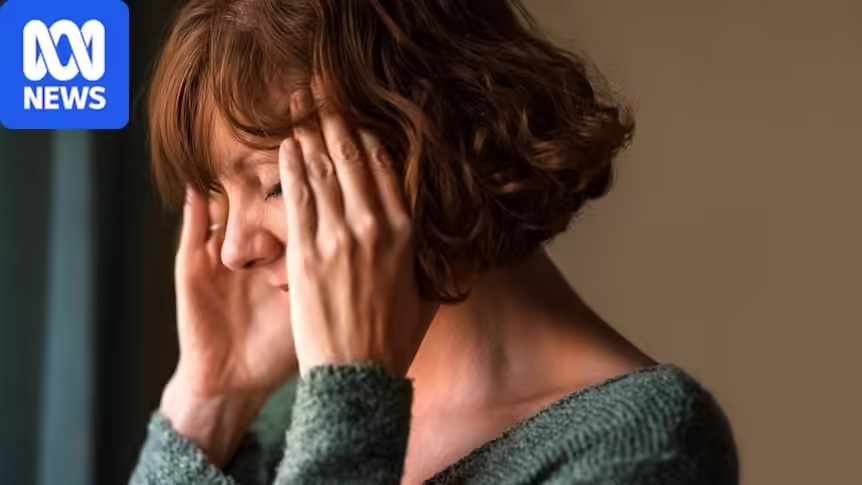

Women are up to 70 per cent more likely to experience chronic pain than men, according to a recent report from the international Menopause Society (IMS).
Chronic pain is pain that lasts more than three months, or keeps recurring.
In women, these pain symptoms often appear in midlife, likely due to factors such as fluctuating hormones, menopause-related biological shifts, lack of sleep and lifestyle changes.
Loading…
The IMS report estimates about half of all middle-aged women experience chronic pain, describing the condition as “often under-recognised, underdiagnosed and inadequately treated”.
Rossella Nappi, IMS president and obstetrician and gynaecologist at the University of Pavia in Italy, says the report aims to empower women and health workers to talk about the condition.
“Chronic pain in midlife is a very important subject and highly neglected,” she says.
“Sometimes the pain becomes widespread and it’s present in every day of their life.”
So what do we know about chronic pain in women and what can people do to minimise the severity of their symptoms?
Why is chronic pain more common in women?
We don’t know for sure.
Adelaide University senior lecturer in pain science Jane Chalmers says this is one of the “hardest questions to answer” in her field.
“Trying to understand why certain people or certain groups are more vulnerable to others is often multi-factorial and very layered,” she says.
“And that’s because we can’t separate a human’s psychology and sociology from their biology.”
Women often experience multiple, overlapping chronic pain syndromes, such as fibromyalgia and chronic pelvic pain.
While not everyone feels pain in the same way, some research suggests women may be more likely than men to experience central sensitisationmaking the brain more likely to produce pain signals.
Nicolette Ellis wants women’s chronic pain to be taken seriously, with many patients currently feeling dismissed. (Supplied)
And then there are social factors.
Chronic Pain Australia chair Nicollette Ellis, who is also a pharmacist specialising in chronic pain, says women often manage the majority of caregiving responsibilities, which may add to stress levels.
The relationship between stress and chronic pain is complex, but stress may worsen pain intensity for some people.
Why do these changes happen in midlife?
Hormones play a role.
During menopause, which marks the end of a woman’s reproductive years, the body produces much lower amounts of oestrogen and progesterone.
Lower levels of oestrogen can lead to joint pain, stiffness and weakening of muscles.
Nearly three in four women experience joint or muscle pain during perimenopause. (Pexels: Kampus Production)
But these hormone levels can fluctuate day-to-day, explains Royal Australian College of General Practitioners menopause health subgroup chair Sharon Vasey.
This fluctuation can lead to migraines, she says.
But it’s not all about hormones. Professor Nappi says lifestyle factors also play a key role in how we age.
“If we do not exercise properly, if we don’t eat adequately and if we are not active very much in our life, pain will be an issue,” she says.
“If we have menopausal symptoms, such as sleep disturbances, for example, or mood changes, this will affect the experience of the pain.”
What type of pain do women report?
The IMS report focuses on three common symptoms: musculoskeletal pain, migraine and pelvic pain.
According to the report, nearly three in four women experience joint or muscle pain during perimenopause.
But figures from Chronic Pain Australia’s 2026 National Pain Report paint a more complex picture.
The group surveyed more than 6,000 Australians, finding women experience an average of 4.6 different types of chronic pain, such as migraines, back, pelvic, joint or nerve pain.
With so many women reporting multiple symptoms, Ms Ellis says it’s important not to treat types of pain in a “silo”, but to consider the whole body and how different systems interact.
What can women do about it?
For women approaching midlife, Dr Vasey says it’s important to get enough sleep, stay active and eat a healthy diet.
She says the first step for people experiencing pain symptoms is to speak to their GP.
“There’s lots of things that can be done, women don’t have to put up with chronic pain,” she says.
Dr Vasey, who is also a practising GP, says menopausal hormone therapy can help ease the severity of some symptoms for some women, but medication isn’t the only option.
It can also be helpful to see an allied health worker, such as a physiotherapist.
As many people with chronic pain experienced a delayed diagnosis, Ms Ellis says it is important health workers take pain symptoms seriously.
“The earlier we can treat [chronic pain] the better the outcomes,” she says.
And a broader level, Monash University professor of occupational rheumatology Karen Walker-Bone says more needs to be done to support women approaching midlife.
This means making sure women have the financial stability to retire when they want, and to ensure emotional household labour is shared in an equitable way.
Source: www.abc.net.au