
Political satire and state power has a long and vexed history in Turkey.
In 1946, two of the country’s best-known writers, Sabahattin Ali and Aziz Nesin, founded Markopasaa socialist-leaning satirical newspaper that sharply criticized class inequality and the government of the day. The paper faced distribution restrictions, pressure on printing houses, confiscations, closures, and criminal prosecutions. Its writers and cartoonists were arrested or forced into exile. Markopasa remains one of the most important examples of socialist and oppositional humor in Turkey.
In later decades, political satire found new forms in cabaret theater and humor magazines, including the work of Ferhan Şensoy and the satirical magazines of the 1990s and 2000s. By the time of the 2013 Gezi Park protests, irony and satire had become prominent forms of political expression.
The protests began with opposition to plans to redevelop Gezi Park near Istanbul’s Taksim Square. The government framed the unrest in terms of hooliganism and terrorism. Many protesters, meanwhile, used humor and irony to defy the government’s account of the movement. Researchers have documented how humor and satire became a form of dissent in an environment where traditional media were subject to tight control.
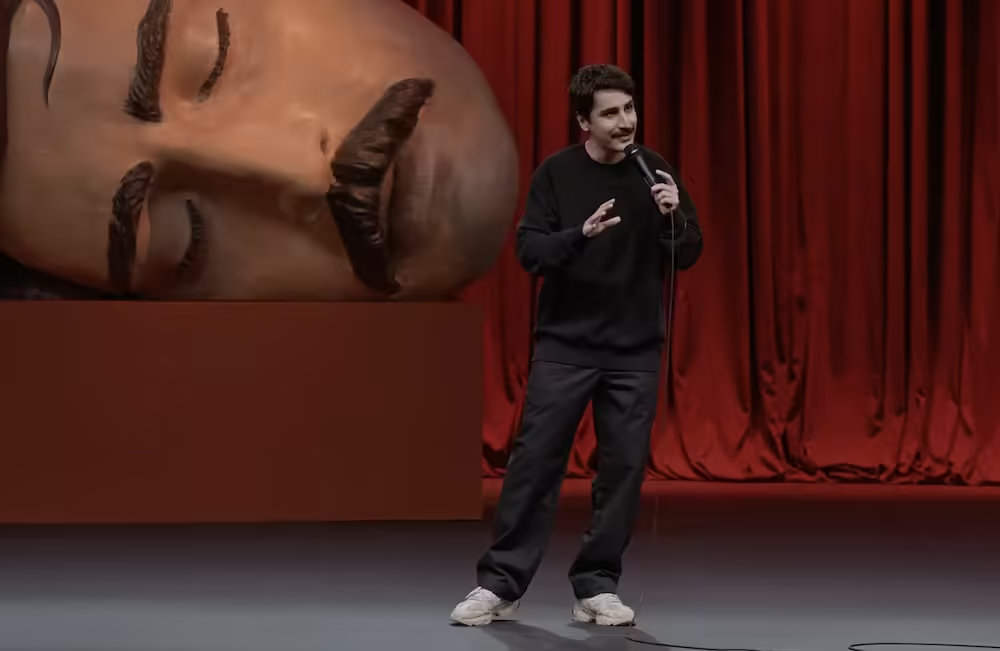
In his courtroom defense, Göktaş placed himself in this tradition, invoking Aziz Nesin, Rıfat IlgazFerhan Şensoy, and Turkey’s major satirical magazines. Then he reached back to Nasreddin Hodjathe legendary Anatolian folk figure whose stories have circulated for centuries. Traditionally dated to 1208–1284, Hodja occupies a place in Anatolian culture somewhat comparable to the traditions of folk wisdom and social satire in American humor.
Göktaş distilled the connection between that tradition and contemporary Turkey into a single sentence: “If Nasreddin Hodja were doing stand-up today, half his show would be about President Recep Tayyip Erdoğan.”
Göktaş argued that calling Erdoğan, who has governed Turkey for more than two decades, a “dictator” was political characterization, not an insult. As the country’s most powerful political figure, Erdoğan should be expected to face satire and harsh criticism, he said. He argued that politicians must be open to ridicule as well as praise.
The language of this debate is not new in Turkey.
A few days ago, I came across a street bookseller on the narrow Kadıköy street where Deniz Göktaş had performed stand-up for years. Among the books on the shelves was has been seena collection by journalist and writer İlhan Selçuk, published in the 1980s.
Leafing through it, I found an essay titled “Freedom of Thought and Tolerance.” One sentence stood out: “Where freedom of thought does not exist, tolerance is nothing more than an empty word.”
Selçuk’s point resonates in the Göktaş case. If political or religious satire is tolerated only as long as it offends no one, can that be called freedom of expression?
Source: jacobin.com