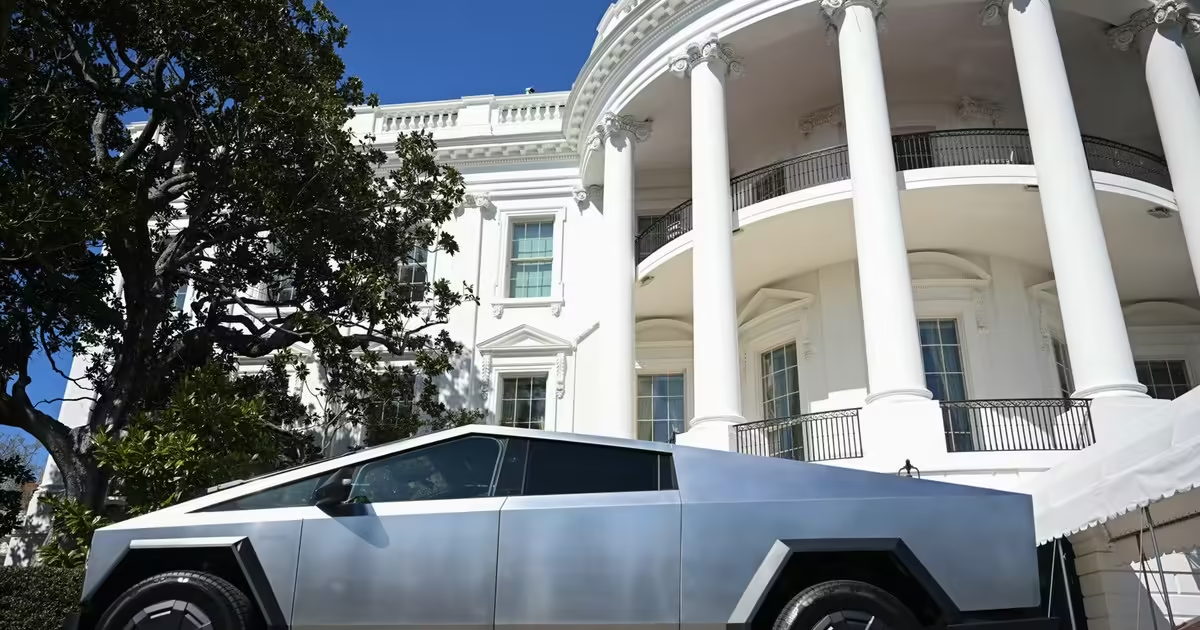

Musk announced the decision on X on Friday, November 6, 2026, saying Tesla would reduce production at its Texas factory to make room for increased output of the Cybercab, its planned autonomous taxi.
“Tesla will be winding down production of the Cybertruck at Gigafactory Texas around the middle of next year to make room for increased Cybercab production,” Musk wrote.
However, he did not clarify whether production would move elsewhere or stop permanently, leaving the vehicle’s long-term future uncertain.
Responding to concerns from owners, Musk said the existing Cybertruck fleet would remain on the roads for years, describing the decision as the “end of an era”.
Cybertruck lead engineer Wes Morrill also defended the pickup’s technological contribution, describing it as an “incredible technology development platform” whose innovations would continue through the Cybercab.
Cybertruck sales fall short of expectations
Unveiled in November 2019, the Cybertruck attracted worldwide attention for its angular design and stainless-steel body, setting it apart from conventional pickup trucks.
Musk initially reported about 250,000 reservations within days of its unveiling and later projected annual production of around 250,000 vehicles.
Despite strong initial demand, repeated delays pushed the first deliveries to November 2023, four years after the unveiling, while subsequent sales fell short of Tesla’s expectations.
According to Kelley Blue Book, US Cybertruck sales fell 48.1% to 20,237 vehicles in 2025, compared with 38,965 in 2024.
Beyond weak sales, the pickup faced recalls, quality concerns and controversy surrounding its design and Musk’s political activities, adding to challenges facing the programme as Tesla redirects production capacity towards autonomous transport.
Tesla shifts focus to driverless taxis as Africa’s EV market grows
While Tesla redirects production towards driverless taxis, the company has been slower than Chinese rivals to expand vehicle sales across Africa, where demand for electric cars continues to grow.
According to the International Energy Agency, electric car sales in Africa rose from about 4,000 in 2023 to 25,000 in 2025, with Egypt, Morocco and South Africa accounting for nearly 70% of sales.
During the same period, Chinese automaker BYD increased its share of Africa’s electric car market from 4% to 35%, expanding into countries including Nigeria and Kenya.
In Nigeria, BYD introduced its Atto 3 and Dolphin electric vehicles through LOXEA in March 2025, having entered Kenya in September 2024 with the Atto 3, Seal and Dolphin models.
Tesla, meanwhile, officially entered Africa’s vehicle market in February 2026, introducing the Model 3 and Model Y in Morocco, but has yet to establish official sales operations in Nigeria or Kenya.
Although the Cybertruck was displayed at its Moroccan launch, it was not offered for sale. Privately imported models have reached Nigeria, South Africa and Ghana, with another spotted in Kenya during an international motoring expedition in January 2026.
Unlike BYD, Tesla has not disclosed Africa-wide sales figures, while high prices and limited charging infrastructure continue to slow EV adoption across the continent.
Source: africa.businessinsider.com