
Punahou sixth graders put their scientific thinking to the test through hands-on investigations exploring friction, motion, buoyancy and density.
In Jenny Kawakami’s science class, students participated in the “Monster Mash 500,” a speed lab examining how different surfaces affect the movement of wind-up toys. Students raced their toys along a 30-centimeter course across seven surfaces, including aluminum foil, sandpaper, felt and plastic cutting boards. Working in teams, they measured travel times, calculated average speeds and graphed their results. Their findings showed that felt and sandpaper created the most friction, slowing the toys. Students then used a Claim, Evidence and Reasoning (CER) response to explain their conclusions using data collected during the experiment.
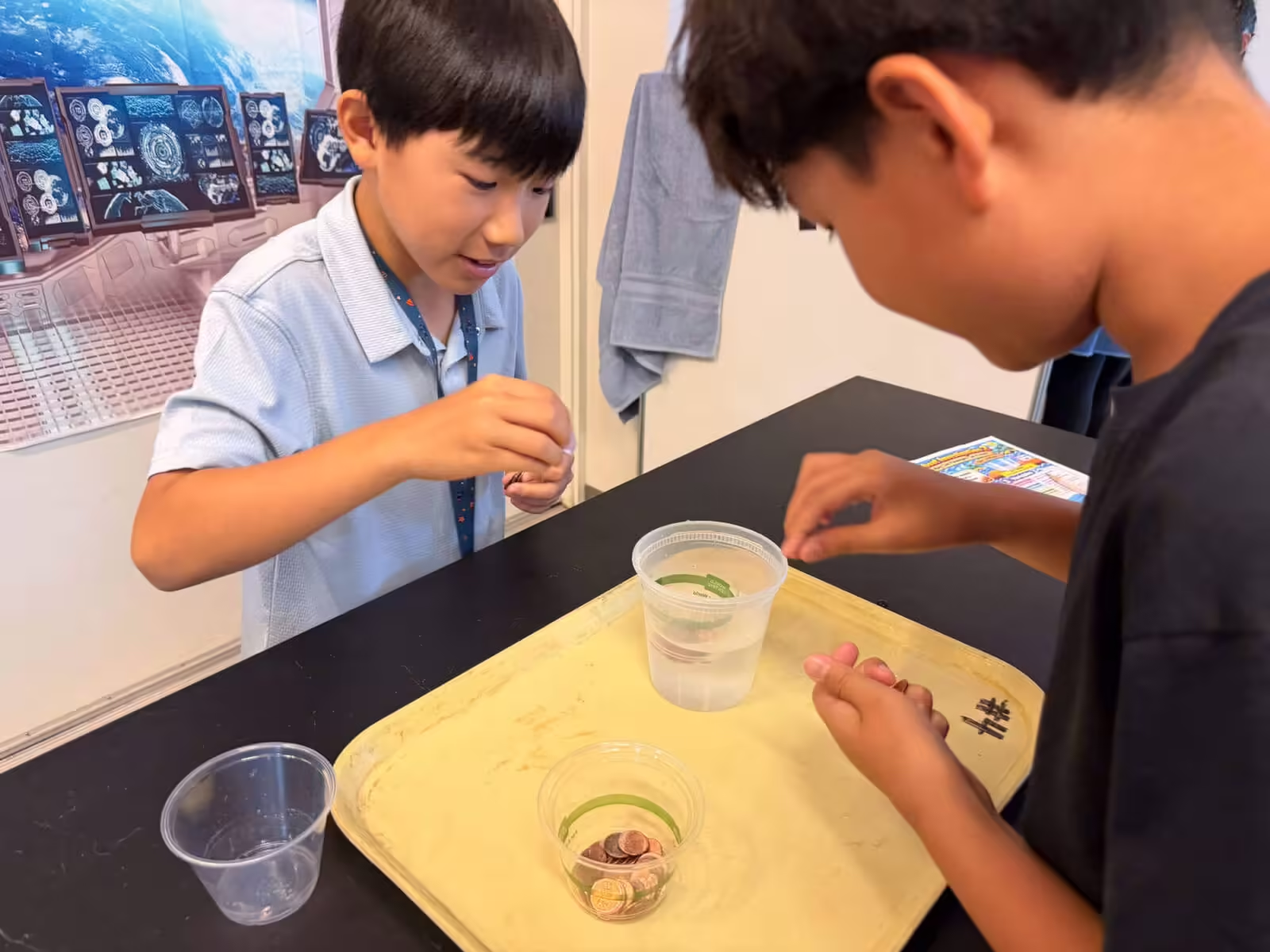
Meanwhile, students in Connie Carroll’s science class explored buoyancy and density through a lifeboat challenge. Using plastic cups as miniature lifeboats, students predicted how many pennies each could hold before sinking. They compared boats of different sizes and investigated how increasing mass affected each boat’s ability to float. Students then graphed their data, determined a line of best fit and applied statistical analysis to predict the carrying capacity of lifeboats they had not tested.
Both investigations gave students opportunities to identify variables, test hypotheses, analyze data and draw evidence-based conclusions while strengthening their critical thinking and scientific reasoning skills.
Source: bulletin.punahou.edu