
Over half of the names the EU added to its sanctions in October are aimed at the production chain of the ballistic missiles now targeting Ukrainian cities, chief diplomat Kaja Kallas said. The list of 826 Russian companies and 743 of their chief executives is the EU’s largest-ever set of military-industrial listings.
A couple of days later, the Council added 12 more names for helping Russia evade sanctions, among them oil intermediaries in the United Arab Emirates and India.
Yet October avoided the politically difficult decisions. No new sector-wide trade ban, and nothing on oil or gas.
Europe has two problems with its Russia sanctions: any one of the bloc’s 27 members can insist that its special interests are protected, and the rules already agreed are enforced unevenly.
July showed how the first problem works. The package passed only after Greece secured an exemption allowing EU operators to carry Russian liquefied natural gas (LNG) to third countries under pre-invasion contracts. A proposed ban on Russian fish imports was dropped along the way.
Every sector-wide measure affects businesses among the 27 members. Every capital has a veto.
Even a list of sanctioned individuals has owners. Estonia, among the bloc’s toughest on Moscow, asked for a Russian company and one individual to be removed from the October draft because it supplies rare earths.
Slovakia had demanded since March that the billionaires Alisher Usmanov and Mikhail Fridman come off the list. In September, France joined the push on Usmanov, and both men were removed in exchange for a three-year renewal of the rest.
Get the Latest
Sign up to receive regular emails and stay informed about CEPA’s work.
Slovakia, meanwhile, still imports Russian crude through the Druzhba pipeline (as does Hungary) under an exemption from 2022, granted on the condition that they phase it out as soon as possible. Imports rose instead.
In September alone, Slovakia paid Russia €229m ($258m) for Druzhba crude and €161m for pipeline gas; in the EU, only Hungary and France paid more. On October 26, Slovak foreign minister Juraj Blanár was in Moscow, discussing energy with his Russian counterpart Sergei Lavrov, including Russian gas that EU law bans from autumn 2027.
The oil exemption’s main beneficiary is MOL Group, which controls the refineries in both Slovakia and Hungary.
Terminating an exemption requires unanimity. The Commission had a way around that by imposing a ban on Russian oil by majority vote, and did the same for gas in January. It was postponed in March amid rising prices caused by war in Iran.
Weapons supply chain sanctions are also hard to enforce. Ukrainian military intelligence expects Russia to build around 700 Iskander ballistic missiles this year, many of them packed with Western-made parts. The October listings identify Russian suppliers, with chips reaching Russia through third-country front companies that are cheap to establish and cheap to replicate.
The oil price cap, the ban on fuels refined from Russian crude and the port bans are law already. Applying them is mostly a national job, and the picture here is very mixed.
In September, seven shipments from refineries processing Russian crude reached EU ports, including six from India’s Jamnagar, with three landing in Italy. EU guidance treats such cargoes as high-risk. Italian customs can ask importers where the fuel came from. Regulators can check insurers that accepted dubious price attestations.
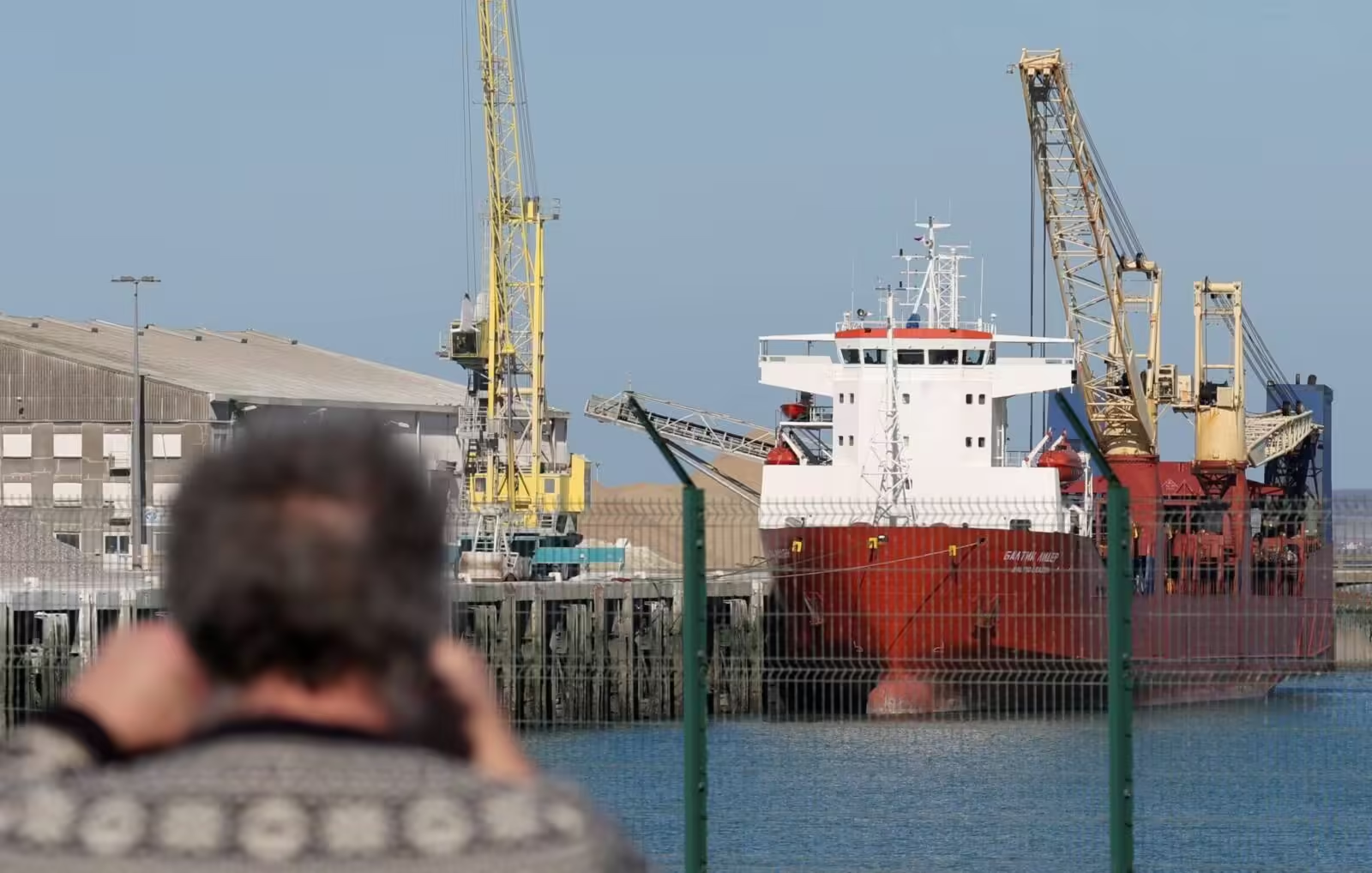
No Council vote is required for this. It needs customs investigators, evidence and lawyers, and the state can lose in court. Agreeing to new rules in Brussels costs a government nothing. Enforcing the old ones at home costs money and political capital. Many prefer the first. Where governments push, it often works. On October 12, the French navy boarded the tanker DF Peak south of Réunion for sailing without a valid flag. It was France’s fifth such operation this year. It is now held at Réunion and may be confiscated.
According to the Centre for Research on Clean Energy and Air (CREA), there were 48 shadow tankers under false flags at the end of September, against 120 a year earlier. It credited coastal-state detentions and pressure on flag registries. Comparable progress is harder to find in origin checks on refined fuel and scrutiny of price attestations.
The power of EU unanimity faced and failed its latest test on October 25. The Council was required to review, on the Commission’s assessment, whether to switch on a ban on selling LNG tankers to Russia. The date passed, and no ban was announced.
Russia’s Arctic gas plant, Yamal, needs special ice-breaking tankers. Greece’s Dynagas runs five of them. Without a ban, CREA warns, they could be sold to Chinese co-owners, and Europe would lose its say over them. Any ban would need all 27 votes.
It is certainly true that EU sanctions impose costs on Russia, but it is equally true to say these are greatly lessened by the actions of member states focused on sectoral interests at home and less on the system’s efficiency.
Miro Sedlák is a senior energy sector executive, a security and defense studies doctoral candidate at the Armed Forces Academy of General M.R. Štefánik, Slovakia and an Associate Research Fellow at the Institute for Central Europe.
Europe’s Edge is CEPA’s online journal covering critical topics on the foreign policy docket across Europe and North America. All opinions expressed on Europe’s Edge are those of the author alone and may not represent those of the institutions they represent or the Center for European Policy Analysis. CEPA maintains a strict intellectual independence policy across all its projects and publications.
Europe’s Edge
CEPA’s online journal covering critical topics on the foreign policy docket across Europe and North America.
Source: cepa.org