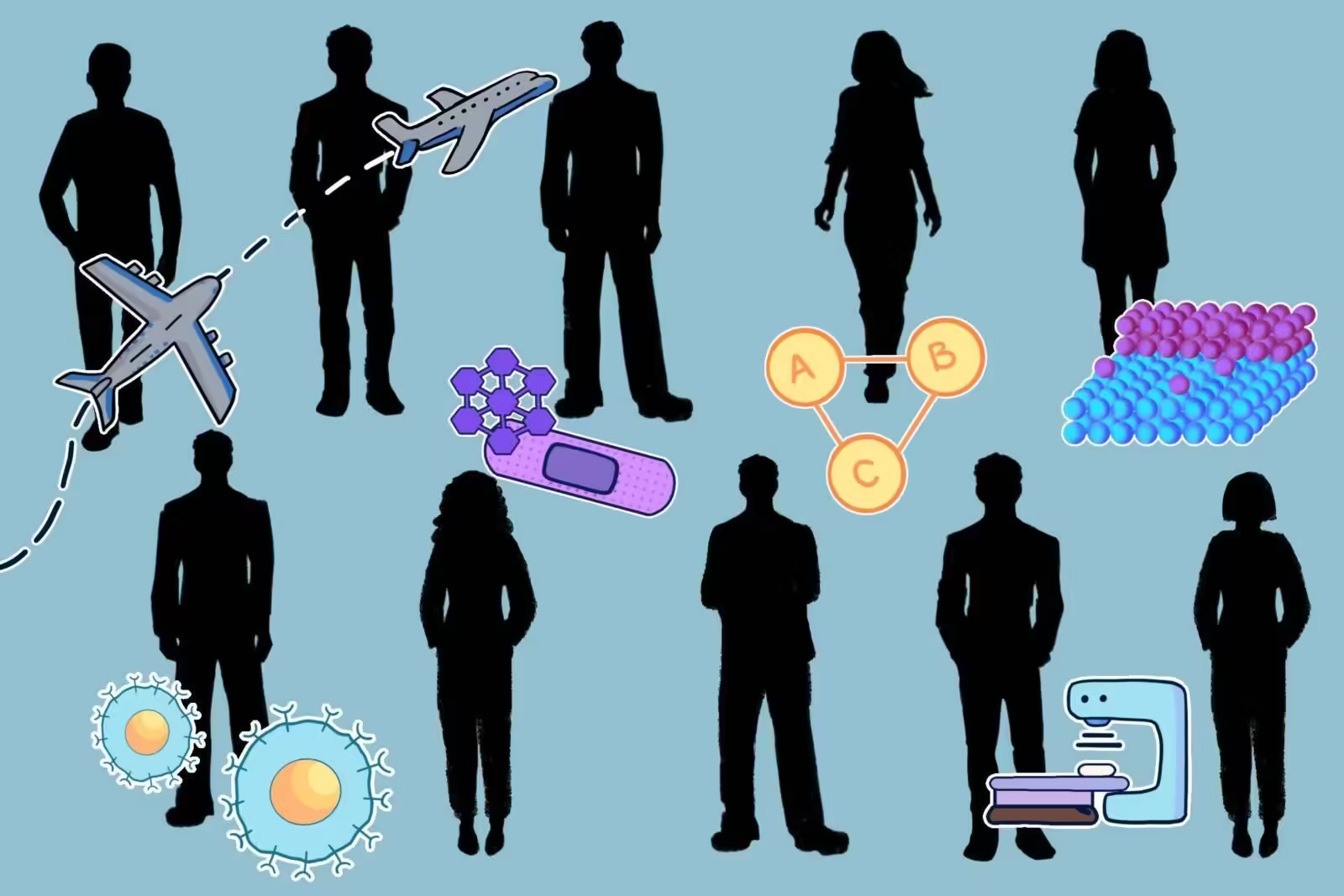

Ten University of Michigan faculty members from the College of Engineering received the U.S. National Science Foundation’s Faculty Early Career Development Program awards during the 2025 funding cycle. These awards are aimed at early-career faculty members and include a grant to fund their research projects and educational activities for the next five years.
Winning projects ranged from air traffic control management to implantable devices that provide information about effective tumor treatment. The Michigan Daily interviewed nine out of 10 award winners about their projects and how the award will help their research moving forward.
Maria Coronel
Maria Coronel, assistant professor of biomedical engineering, is working to utilize engineering principles and design processes to solve medical challenges. As an undergraduate at the University of Miami and doctoral student at the University of Florida, Coronel designed a tissue-like material that can generate oxygen and interconnect with tissues through vasculature — the arrangement of blood vessels in a body part.
During her postdoctoral research, Coronel pivoted to researching how known proteins can control immune system function and dampen the inflammatory response the body experiences after it receives an organ transplant. In an interview with The Michigan Daily, Coronel said she and her lab are currently studying materials that can have an active role in the human body.
“My lab is truly interested in engineering programmable materials — materials that don’t just sit there in the body and don’t do anything and are inert,” Coronel said. “We actually want them to be able to actively read the biological environment and tell us what is happening in real time and how these tissues are changing in real time to be able to then act.”
Coronel’s winning project, “Decoding Chronic Wound Trajectory Through Real-Time Biomaterial-mediated Cytokine Sensing,” aims to understand wound healing. Coronel’s goal is to engineer a smart material to map out cytokine signals — molecules the immune system uses to communicate with each other — and decode them to understand whether a wound is healing, and understand why if not. Coronel said this award will allow her lab to produce programmable materials that can be used in many different wound-healing contexts.
“People with diabetic foot ulcers are going to be very different than people who are bedridden or people who have wounds that are made through bacterial infection,” Coronel said. “Understanding those differences is going to be very, very important. … (The award) would open up opportunities to look at them through different therapeutic lenses.”
Coronel said she also plans to use the award to benefit the community by connecting with Ann Arbor students interested in biomedical engineering.
“(The award is) just bringing me a little closer to the community as well,” Coronel said. “Bringing in some of the science that we’re trying to do to the students to motivate them and teach them about what BME is.”
Aline Eid
Aline Eid, assistant professor of electrical engineering and computer science, has studied topics ranging from wireless power to underwater communication. In an interview with The Daily, Eid said her curiosity serves as the foundation of her lab and drives its research.
“Typically, in my group, we do our best to look for real problems — real pain points — and then drive a solution from there,” Eid said.
This rationale applies to her NSF award-winning project, “Injectable Transponder for Precise Radiotherapy Tumor Targeting and Dosimetry,” which emerged from Eid’s interest in radiotherapy and her observation of two problems: targeting treatment to a tumor’s location and ensuring the calculated dose reaches the tumor instead of the surrounding tissue. After consulting experts at Michigan Medicine, Eid said she devised a device that presented a solution to these twin problems.
“If we can have a device that could tell us in real time that we’re aiming in the right place at the tissue, at the tumor, and how much dose is actually being received there, this would be very helpful,” Eid said. “I have a lot of experience in localization, so with that, I came up with the idea of this implantable device that could help for radiotherapy.”
Eid said she hopes the award will help her improve patients’ lives.
“How (the award) will impact my career, I think we will see, but my hope is that people will benefit from it and it could save lives,” Eid said.

Max Li
Max Li, assistant aerospace engineering professor, has been interested in transportation since he was a kid — he told The Daily he even wrote his undergraduate admissions essay on how to improve the public transportation system in Philadelphia. Li said that, as an electrical engineering undergraduate student at the University of Pennsylvania, one of his professors and mentors recognized his passion and advised him to direct it toward aviation.
“I actually started doing research ever since I was in the first year of my undergrad,” Li said. “I had worked on everything from airline fuel noting practices to airport economics, then went on to do my master’s thesis looking at problems in air traffic control and air traffic management. And honestly, I’ve been really bitten by the aviation bug ever since.”
Li directs the Laboratory for Air Transportation, Infrastructure, and Connected Environments, which focuses on how air transportation works as well as how it can be improved. In particular, his NSF award-winning project — “Proactive and Practical Management of Air Traffic Disruptions” — entailed working with air traffic control units to update outdated materials, helping controllers maintain a smooth and efficient flow of traffic in the skies.
Li said his team is designing advanced mathematical and engineering models to enhance the training process for future air traffic controllers.
“Right now, it’s a very static process,” Li said. “We just give you a training problem and you read through it and work through it. But it would be nice if we could give you a ‘choose your own adventure’ training scenario depending on where you’re the weakest.”
Micah Borrero, a doctoral aerospace engineering student who studies under Li, told The Daily Li’s work in system-level dynamics drew him to LATTICE. There, Borrero can research multimodal network design — the integration of current- or next-generation transportation technologies to enhance the operation of the National Airspace System.
“There’s a flight from Lansing to Detroit, if you’re flying to London,” Borrero said. “Realistically, that’s a 34-minute flight that could perhaps be operated by some other mode, whether that be a bus, train or, maybe down the road, advanced air mobility. We’re looking to see how we can integrate that, and if we do integrate it, how do people respond to that and whether or not that makes the system better.”
On Li’s NSF project, Borrero works on computational modeling, simulating how the NAS changes in the face of unique scenarios and how errors can be rectified. Borrero praised Li as a mentor.
“I think Professor Li is amazing,” Borrero said. “He is honestly a genius. It has been a tremendous opportunity to be able to learn so much from him, his wealth of knowledge in air transportation and aerospace engineering.”
Aaron Morris
Throughout his academic and postdoctoral career, Aaron Morris, assistant professor of biomedical engineering, has explored several areas in his field. He was a doctoral student at Yale University before becoming a postdoctoral student at the University, where he worked on creating biomaterials that interact with the immune system.
In an interview with The Daily, Morris said he started a lab that combined his interest in immunology with biomedical engineering upon returning to the University.
“My lab sits at the interface of all of these areas,” Morris said. “I’m bad at giving up things that I enjoy doing. We are really interested anytime the immune system is not doing what it’s supposed to do. I say that we study diseases of immune dysfunction.”
Morris’ NSF award-winning project, “Deciphering T Cell Reprogramming – Toward Biomanufacturing of Regulatory T Cells,” focuses on regulatory T cells, which turn down immune responses, prevent inflammation and combat autoimmune diseases. However, generating these cells is difficult because they’re very antigen-specific. Morris said his lab is interested in understanding how peripheral regulatory T cells work by recreating the environment in which they form — the lymph nodes and spleen.
“(The project is) about developing those systems to help us understand, in vitro, how (regulatory T cells) form,” Morris said. “What is important for them to form, what’s maybe less important? How can we improve their formation and hopefully, eventually, how can we work toward some sort of system, like a bioreactor, that can produce lots of these and do it reliably?”
Morris said this project could only have been possible through the work of people inside and outside of the lab, including funding efforts like the NSF award.
“It’s truly a team effort to get something like this across the finish line,” Morris said. “We’re fortunate enough that this one was reviewed positively and funded, but even the ones that don’t get funded are a big effort. So it’s not just the lab. It’s not just me.”

Max New
After studying math and computer science as an undergraduate student at Northwestern University, Max New, assistant professor of electrical engineering, pursued his doctorate at Northeastern University in computer science with a focus on type systems — a set of rules connecting terms and data types in a programming language.
In an interview with The Daily, New said types can be used to find errors in programming.
“Types, we use them as a way to rule out certain kinds of bugs in a programming language,” New said. “Some languages have types, some don’t and gradual typing was about, ‘How do we take an existing language that doesn’t have types and add types to it so we can catch bugs and implement it more efficiently?’”
While teaching a class at Northwestern, New began to dig into the theory behind parsing — the process by which input from the outside world collected in zeros and ones is translated into a usable format by computers. New said the project that won the NSF award, “Foundations and Verification of Parsers and Type Checkers,” aims to develop a new computer language that could parse data while averting the security vulnerabilities that come with incorrect parsing, such as data corruption.
“We took this new mathematical semantics that we developed and we designed a programming language around that in which you could write parsers that were formally verified — mathematically proven to be correct — and to not have these security vulnerabilities,” New said.
New said this award will provide financial compensation for students to continue researching, which can help distribute this project out into the world where it can have a real impact.
“(The award is) going to allow me to fund the student, which is going to allow me to get more publications and hopefully get this new kind of verified parser out and into more realistic industry settings,” New said.

Jeong Joon Park
After studying computer science as an undergraduate student at the California Institute for Technology, Jeong Joon Park, assistant professor of electrical engineering, decided to pursue his doctorate in 3D computer vision, an intersection of all his interests — computers, physics, artificial intelligence and business, at the University of Washington. This area of study produces 3D depictions of the world from 2D images with the help of AI models that reason out the world through geometry and physics.
In an interview with The Daily, Park said his award-winning project, “Generative 4D Simulation with Physical Constraints,” aimed to improve generative models by supplying them with known constraints.
“(Generative models are) black boxes,” Park said. “You just put in inputs, and they generate something and there’s oftentimes no guarantee that these outputs abide by the laws of physics, abide by the constraints that you want to put in. For example, you see these videos, and oftentimes they just generate mass out of thin air, which is impossible with the laws of physics.”
While illogical models are acceptable when viewed as entertainment, Park said they are ill-suited for high-stake applications. Park said he began collaborating with experts in other fields at the University after he joined as a faculty member, and these conversations sparked his interest in creating less fallible generative models.
“(The other experts) don’t just care about making something plausible — they care about generating something that is meaningful and valued and failure-safe,” Park said. “That really got me interested into, ‘How can we be more responsible in generating this content and to help those people in those application areas?’”
Park’s research is currently general purpose, but he expressed interest in working with both Michigan Medicine to use these 4D simulations to reconstruct moving organs for diagnosis and radiation oncology and Michigan Aerospace Engineering to assist in their simulations. Park said this award will allow him to apply his experience to fields other than computer science to have a more direct impact on society.
“We know that this is a good direction, but oftentimes the people in the other domains are the ones who can finish that last mile and apply that to their own domains,” Park said. “For me, I really have a desire to contribute in the process myself.”
Wenhao Sun
With a love for science extending back to his childhood, associate engineering professor Wenhao Sun told The Daily his passion for science kicked off when his dad explained how wind works.
“I was 8 years old and I was like, ‘I don’t know. Where does wind come from?,’” Sun said. “And he’s like, ‘The sun shines on one area of Earth and it heats up the air there. That air rises, and when it rises, it creates a vacuum. All the other air rushes in and rushing in is the wind.’ And that totally blew my mind.”
Sun began his undergraduate career as an engineering sciences and applied mathematics major at Northwestern University, but found he wanted a concrete foundation to apply these concepts to, which led him to pursue a second major in materials science and engineering.
After discovering material science was where he excelled, he stuck with the field for his doctoral degree, where he explored how computers might be able to predict properties of materials that don’t yet exist.
In his award-winning project, “Predicting the Synthesis and Synthesizability of Metastable Epitaxial Thin Films,” Sun’s team works with high-dimensional phase diagrams on more than the traditional two axes.
“All phase diagrams are two-dimensional — they’re printed on paper (and) work on computer screens — but nature has a lot of ways to control materials that are more than just two axes,” Sun said. “So we started thinking about what we call high-dimensional phase diagrams — do I have a third axis or a fourth axis?”
Sun said this research can be helpful for both manufacturing high-value materials and educating children around Ann Arbor. He said the lab has been working with virtual reality headsets to help students understand these abstract concepts.
“We’ve been building a lot of tools that take a lot of material science concepts, like high-dimensional phase diagrams, into this real 3D world,” Sun said. “It’s fun for students, but it’s super useful to change the way you think, expand the way you think. I think (the grant will) also be useful for research.”

Nicole Wein
Nicole Wein, assistant professor of electrical engineering, studies the intersection of her double major in computer science and mathematics, which she pursued at Harvey Mudd College. In an interview with The Daily, Wein said her passion for theoretical computer science, largely rooted in mathematical proofs rather than computer programming, stems from a computer science class she took as an undergraduate student.
“I took a class on theoretical computer science that was required for all CS majors and the professor was really awesome and inspired me,” Wein said.
From there, Wein earned her doctorate degree in computer science from the Massachusetts Institute of Technology in 2021, where she began working in her current domain: graphs — what Wein described as a network of nodes with lines creating paths between them.
“In the social network case, the nodes would be people and there would be a line if two people are friends,” Wein said.
Wein’s NSF award-winning project, “Paths in Graphs: Structural Primitives and Algorithmic Advances,” focuses on understanding these paths and efficiently processing large networks to get information out of them. Wein said the award will mostly be used for funding her doctoral students by supporting their research and helping them launch their own careers.
“I don’t work in an area where I need a lot of expensive lab equipment; we really can just do math with a pen and paper,” Wein said. “I don’t need the money for that kind of thing. The main thing I need it for is for supporting PhD students.”

Connie Wu
Connie Wu, assistant professor of biomedical engineering, has always been interested in the puzzle-solving aspect of engineering. She studied chemical engineering as an undergraduate at Yale University and doctoral student at the Massachusetts Institute of Technology. ”
With previous research exploring bioanalytical chemistry and protein detection, Wu wrote in an email to The Daily that her NSF award-winning project, “Expanding the dimensional and multiplexing frontiers of ultrasensitive single-molecule protein detection,” focuses on measuring low-abundance proteins.
“Proteins in our blood and other biofluids hold a wealth of information about our health, but many are present at very low concentrations, and existing technologies face challenges in detecting many of these proteins reliably and with high throughput,” Wu wrote. “The NSF project aims to expand the biological and clinically useful information that we can get from protein measurements, from abundance to function, using broadly accessible instrumentation.”
Wu wrote the funding this award provides will grant the lab further opportunities to research protein detection.
“This award will provide important support for my lab to pursue new directions in ultrasensitive protein detection and establish a strong foundation for our long-term research program,” Wu wrote.
Daily Staff Reporter Hannah Bodnar can be reached at [email protected].
Related articles
Source: www.michigandaily.com