
In 2025, an international trial found that people treated for colon cancer were more likely to be alive eight years later if they had received long-term exercise coaching.
The question facing doctors now is less whether people with cancer should exercise than how to build it into routine care.
In the US, that shift is reaching hospital standards. From January 2027, breast cancer centers must screen patients’ physical function and recommend exercise or physical therapy where needed.
Yet experts caution that the trial’s findings may not apply to every cancer or every patient.
Does exercise improve colon cancer survival?
The 2025 trial, called CHALLENGEwas led by the Canadian Cancer Trials Group. It began enrolling patients in 2009 and published its results in 2025. Its 889 participants came from six countries, most from Canada and Australia. All had finished surgery and chemotherapy for stage 2 or 3 colon cancer, which had not spread to distant organs.
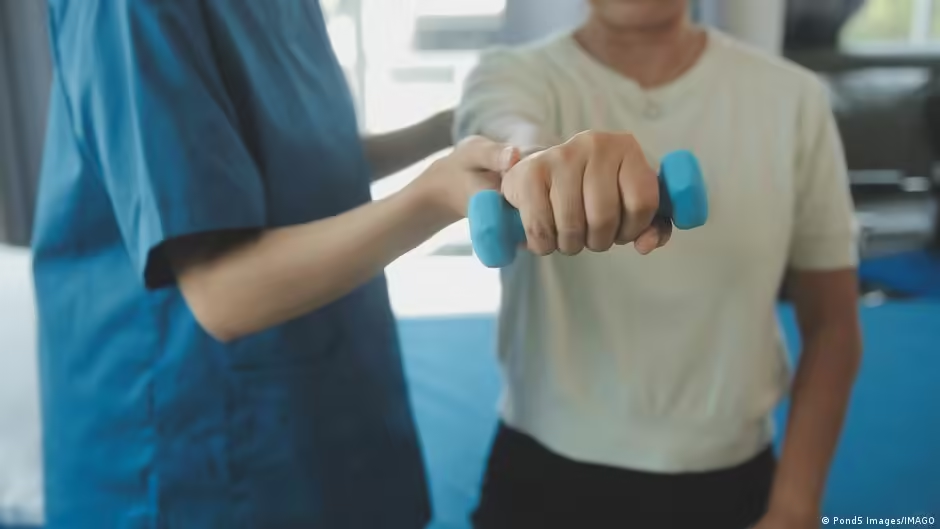
Half received only health education materials on exercise and healthy eating. The other half additionally met a physical activity consultant for three years.
In the exercise group, the target was similar to adding 45 to 60 minutes of brisk walking, three to four times a week. The amount and type of activity varied from person to person, said Tormod Skogstad Nilsen, a cancer exercise researcher in Norway, but participants achieved lasting increases in their physical activity.
Exercise helped. People in the exercise group were less likely to see their cancer come back, to develop a new cancer or to die. In all, 93 had at least one of these setbacks, compared with 131 in the health education group.
What does ‘living longer’ mean for cancer patients?
In cancer research, living longer usually means a larger share of people is still alive at a given point. It does not promise anyone a set number of extra years.
Eight years after joining CHALLENGE, about 90 of every 100 people in the exercise group were alive, compared with about 83 of every 100 in the health education group. That is about 7% more people alive in the group who had guided exercise.
Can exercise prevent cancer?
For people without cancer, the evidence comes from studies that follow people’s habits and health over many years. These can show a link, but not prove cause and effect. Active people may also eat better or smoke less.
In another 2025 studymore than 85,000 adults in the UK wore a wrist tracker for a week. Over about six years, those who moved most had a 26% lower risk of 13 cancers, including breast and colorectal cancer, than those who moved least.
Even light activity, such as household chores, was linked to lower risk. The link held after researchers accounted for lifestyle, weight and other health conditions.
Earlier research, based on people’s self-reporting, has led to similar conclusions. A 2016 analysis of 1.44 million adults in the US and Europe linked free-time activity to a lower risk of many cancers, largely regardless of weight or smoking.
A trial to prove prevention is unlikely: Many cancers take years to develop, so it would need huge numbers of people followed for a long time.
Could exercise help people with breast, prostate or other cancers?
CHALLENGE included only people with colon cancer. But how it picked participants offers a clue: Before joining, they had to pass a fitness test.
Anna Campbell, a professor of clinical exercise science at Edinburgh Napier University in Scotland, sees that as a guide.
“I think patients with any other cancer stage II and III who have a reasonable baseline level of fitness and no major comorbidities that would prevent them from undertaking moderate to vigorous activity could be considered for similar interventions,” she said. Comorbidities are other health conditions.
Nilsen noted some people decline to join exercise trials because they feel too unwell or tired, or do not want to exercise. “Hence, study populations are typically younger, ‘healthier’, and most times slightly more motivated compared to a clinical population,” he said.
Why does long-term support matter for cancer patients who exercise?
The coaching aimed to make activity a lasting habit and Campbell said that is where the trial’s value lies.
“The main success of the study is that it enabled the participants to become independent exercisers staying active in a safe and effective and individualized way,” she said.
Nilsen agreed. Helping people become more active “in their own environment,” without depending on a well-equipped training center, “would likely lead to more sustainable activity behavioral changes,” he said.
He is wary of fixed targets, however. “Exercise should be tailored to each individual and the challenges they face, rather than striving to reach a given minimum of exercise required,” though health care resources may not always allow it, he added.
Do cancer patients get exercise support?
In a 2024 survey of 549 people with cancer, only one in ten had been referred to an exercise service. Yet almost three in four thought their oncologist should raise the subject.
“There are some excellent examples of effective pathways but these are few and far between,” said Campbell. Good ones bring everyone on board, from surgeons to community fitness instructors.
“Ideally, one person in the clinical setting needs to champion the program to link all the team together.”
What could exercise support look like in routine cancer care?
Campbell expects CHALLENGE’s regular coaching will be cut back in everyday care. Apps and live online group sessions could still work, she said, if run by properly trained staff.
One recent study of live online exercise engaged patients from poorer backgrounds, in rural areas and with advanced cancer. “I think it answered some of the barriers, such as cost, travel and lack of confidence,” she said.
Patients can ask their care team what exercise is safe for them and what support exists.
A training session can bring structure and company, Nilsen said. “You made it here, despite your feeling unwell or fatigued this morning, so you feel mastery based on that.”
Source: www.dw.com