
He Minimum Domestic Complementary Tax (IMCD) which is beginning to be applied to multinationals with turnover of more than 750 million euros, generates debate among experts about its real impact. At the event “Free zones and competitiveness in the era of the Global Minimum Tax” which took place in the University of Montevideo (ONE)there was agreement among experts that free zones are very valuable for the economy and innovation of Uruguaybut some opinions about the new tax They were divergent. Especially since some consider that the Minimum Global Tax that arose in the Organization for Economic Cooperation and Development (OECD)it is not mandatory and Uruguay could have avoided it, just as he did for example Costa Ricaat least until now.
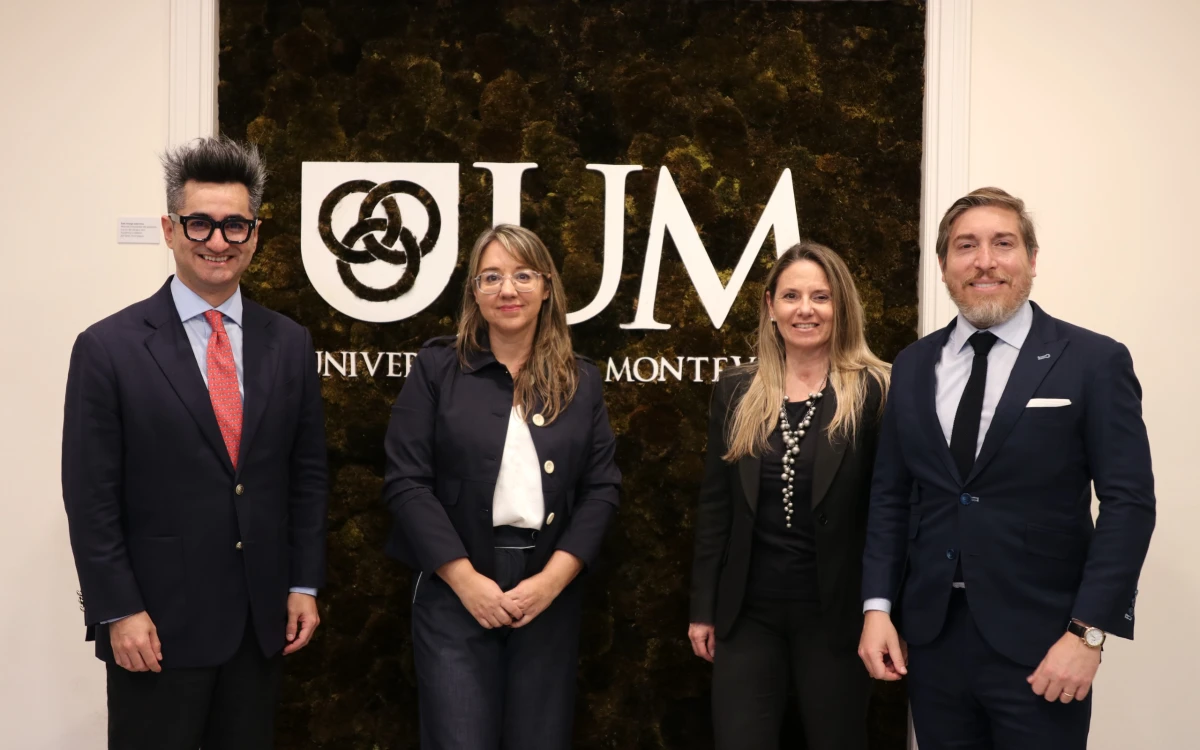
The panelists were Eliana Sartoridirector of the Tax, Legal and Accounting Services area of the Chamber of Free Zones and director of Tax, Legal and Accounting Advice of PwC; Catalina CamejoTax Advisory official of the General Tax Directorate (DGI) and postgraduate professor of International Taxation at the UM; Leopoldo Paradaadvisor on fiscal policy to governments and international organizations and professor at the King’s College de Londres; y Carlos Loaizalawyer and postgraduate professor in International Taxation at the UM, who also served as moderator.
Uruguay’s cards have already been cast, the government made a decision to join the will of the OECD with some points that it negotiated, and the forum’s proposal was then to look forward. The axes of discussion were how to redesign the incentives in the free zones of Uruguay, and how to reduce the possible negative impacts on investors who eventually think that the government changed its rules of the game.
Loaiza said from the outset that this is a tax that is not required by the OECD or the inclusive frameworkand that it is a sovereign decision of the countries. “There are OECD member countries with free zone regimes with weight in their economy that have decided on a strategy of wait and see (wait and see) and not implement it,” he said in relation to Costa Rica.
Stop was categorical in stating that, in his opinion, The Global Minimum Tax (GMI) has a “negative impact” in the free zones. “We must recognize it,” he said, observing that many governments chose to follow the OECD guidelines but that, however, they should not stop recognizing the problems that the tax can generate not only at a fiscal level, but also at a legal level.
“With the free zone regime, a message is given to foreign businessmen that the rules are not going to change, but now with this tax uncertainty is generated,” he said, also warning that there could be litigation against the Uruguayan State.
Loaiza, for his part, adopted a more moderate position, considering that, if something has characterized Uruguay throughout its history, it is the fulfillment of its commitments and, furthermore, “it is complex to discern the impact that this situation may have on the investments”he pointed out. He noted that there are companies that “do not care about this tax” and that come to the country for other reasons beyond the tax exemptions of the free zones. In any case, he acknowledged that the impacts may be variable, although difficult to predict at this time due to lack of empirical evidence.
This position, supported largely by Camejo, It did not convince Parada, who believed that the cases mentioned “are anecdotal data, not the generality.”
In fact, the government has already made the decision to opt for the IMCD – which has not been easy, they acknowledged – and there was a certain consensus that each company will analyze its situation, because the elasticity of each investment is different and also because there are compensation mechanisms provided for in the law.
ONE.
“It is not the same as companies having planted hectares in the country (they cannot take the land with them), that a data center“Loaiza explained in relation to the ease of withdrawing from Uruguay.
“Las GloBe rules (Global standards against the erosion of the Tax Base) provide that, when countries have fiscal stability clauses, the State can take measures to continue providing legal security,” Camejo stressed.
In this sense, the panelists debated the instruments to compensate and pointed out that it would be advisable to redesign some incentives, to the extent that constant changes are also taking place at that level in the world. Even the OECD itself has been generating modifications in its positions; For example, currently it is promoted “the inclusive framework” (so that more countries join the IMG).
Another additional issue is that, in the future, the 15% IMG (pillar 2) that applies to multinationals With certain income, that threshold could be lowered, which would expand the number of companies affected. But that is not yet known, nor is it openly raised by the OECD.
“The problem here is what will happen with the new investments, and how to understand the substance exclusion“Sartori warned, adding that the new regulatory standard on the matter applies to all users and what could be conditional is the compensation, not the tax.
The exclusion of income by substance is a deduction from the tax base of the Complementary Tax that depends on the real activity of the group in each jurisdiction. The basic idea is that the more the multinational contributes to the country where it is located from economic or as added value and how much more effective employment generatesthe more substance exists to be “awarded”.
In fact, there is an international evolution towards the trend of aligning the benefits granted to the value where the activity is carried out. “This has to do with the incentives that Uruguay can incorporate, or rethink in its policies,” said Sartori.
Parada gave another nuance to the topic by also considering that, beyond substantial investment, the country must also question how it wants to be more competitive and what type of companies it really wants to attract. Furthermore, although it is often suggested that the OECD leaves spaces to compete, consider that the competition is always going to move. Along these lines, he warned about other taxes that should not be touched because they are at the heart of collection, and about the importance of not increasing the fiscal deficit in the midst of these new tax dynamics.
According to Sartori, it is not easy to think of a “global solution”, given that the very bases of the Global Minimum Tax are not “global” and this occurs regardless of what the Uruguayan government does or does not do in terms of incentives, exemptions or compensation.

ONE.
The panelists observed that the IMG is not collecting as much as was thought before beginning its application.
Finally, the observation emerged that the OECD and GloBe are experiencing a difficult time, given that they only receive mandatory contributions from USAno longer the volunteers, which is a huge blow for the organization.
It is worth remembering that the president of the United States, Donald Trumpdecided, in his second term, to withdraw from the OECD tax agreement to adopt the Global Minimum Tax, alleging “unfair treatment for American companies”, making it an exception.
Source: www.elpais.com.uy