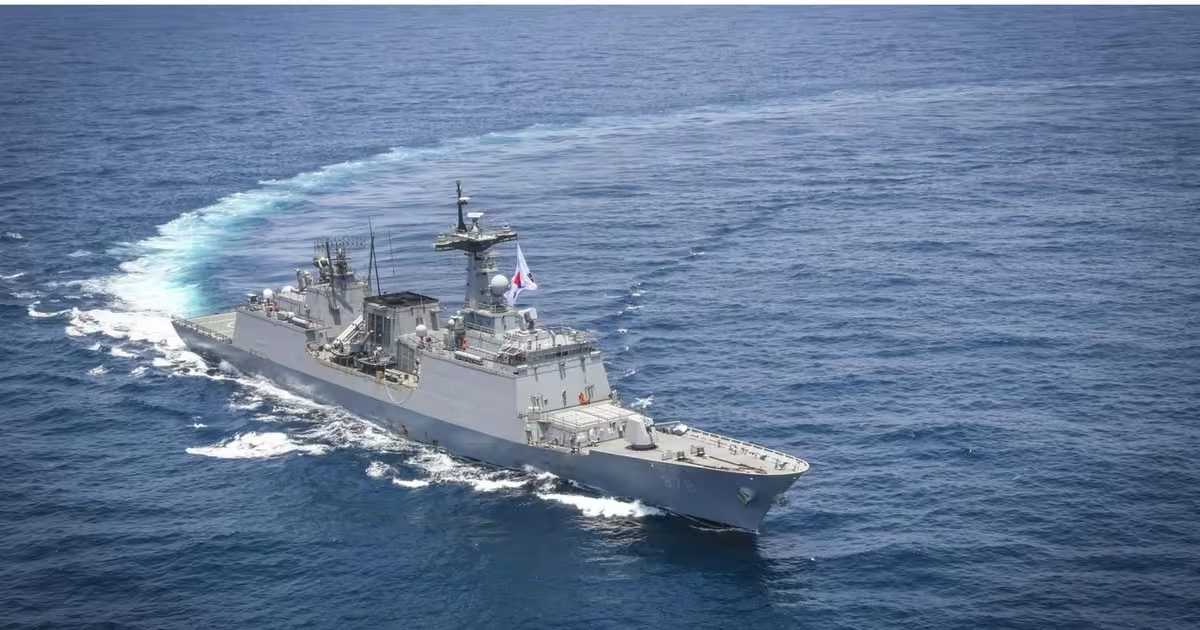

The move will extend Seoul’s Cheonghae anti-piracy unit, which has protected commercial vessels in the Gulf of Aden off Somalia since 2009, towards waters near Oman’s port of Duqm, 650 kilometres from the strategic waterway.
According to Yonhap News Agency, the unit, currently equipped with a 4,400-tonne destroyer, a maritime helicopter and patrol boats, will receive a P-8A maritime patrol aircraft, explosive ordnance disposal specialists and unmanned mine-detection equipment, while its personnel will increase by 75.
The planned reinforcement comes amid growing threats to commercial shipping through the Strait of Hormuz, which normally handles one-fifth of global oil supplies, with dozens of vessels attacked since the US-Iran war began in February.
October recorded the highest number of attacks since the conflict began, adding urgency to international efforts to secure the waterway.
South Korea moves ahead despite Iran’s warning and US pressure
US President Donald Trump has spent months urging South Korea, Japan, China, France and Britain to deploy warships and minesweepers to the Strait of Hormuz to help secure the waterway and restore commercial shipping.
He later criticised Seoul for providing insufficient support during the Iran war, a dispute that prompted Washington to scale back major joint military exercises with its Asian ally over the summer.
On the other side of the conflict, Tehran also warned Seoul against joining military operations in the waterway, with Iranian Foreign Ministry spokesperson Esmaeil Baqaei issuing a Korean-language statement in September.
“Iran attaches great importance to its friendly relations with South Korea,” Baqaei said, warning that participation in military operations near the strait could have “serious consequences.”
South Korea’s Defence Ministry, however, said the expanded Cheonghae mission would remain strictly non-combat and operate independently of allied forces.
“The enhancement of the Cheonghae unit’s mission is to protect our citizens and safeguard our economic interests,” a defence ministry official told reporters on condition of anonymity.
“Operations will remain restricted to the open waters south of Oman, and the maritime patrol aircraft will be prohibited from targeting or monitoring Iranian territory, territorial waters or the interior of the Strait of Hormuz during their missions,” he added.
Before the latest announcement, President Lee Jae Myung had also ruled out deploying South Korean forces in a way that could draw the country into the conflict.
“We have upheld the principle of non-involvement and non-intervention in the war until now,” he said. “And we will continue to uphold it going forward.”
The East Asian nation sourced 70% of its oil imports from the Middle East in 2025, with most shipments passing through Hormuz. The proposed expansion of the Cheonghae mission, whose current authorisation expires in December 2026, requires parliamentary approval.
Djibouti emerges as potential base for South Korean aircraft
South Korea is also considering Djibouti, which hosts major US and Chinese military bases, as a base for its additional P-8A maritime patrol aircraft, according to Yonhap News Agency.
Although Seoul has ruled out direct military involvement against Iran, Tehran has continued to warn against foreign deployments near the strait.
In an image accompanying Baqaei’s September statement, Iran issued a further warning directed at South Korea.
“Dangerous choices come with a price,” the message read.
Source: africa.businessinsider.com