
From Sudan and the Democratic Republic of Congo to Cameroon and Rwanda, African lawyers demand accountability, stronger protection of human rights and an end to impunity.
By Ajong Mbapndah L
The African Bar Association (AFBA) has issued far-reaching resolutions demanding stronger protection of human rights, accountability for atrocities and renewed commitment to the rule of law across Africa. The resolutions, adopted at the association’s 2026 Annual Conference in Cabo Verde, address some of the continent’s most troubling conflicts and governance challenges, including the crises in Sudan, eastern Democratic Republic of Congo and Cameroon, the detention of Rwandan opposition figure Victoire Ingabire, xenophobic violence and the independence of international justice institutions.
Meeting from September 20 to 24 at the Oasis Atlantico Hotel Belorizonte on the island of Sal, lawyers, government officials, judicial representatives, security experts and civil society organisations examined the relationship between security, constitutional governance and sustainable development. The conference brought together participants from across Africa and beyond, reflecting growing concern within the legal profession over persistent human rights violations and the failure of national and international institutions to adequately protect vulnerable populations.
Cabo Verde’s Acting President, Janira Hopffer Almada, officially opened the conference, which attracted prominent legal and government figures, including Nigerian Attorney General and Minister of Justice Lateef Fagbemi, Uganda’s Deputy Attorney General Jackson Kafuuzi Karugaba, Ghana Bar Association President Efua Ghartey and Liberian National Bar Association President Juah Lawson. Representatives of several African governments, national bar associations and international organisations also participated.
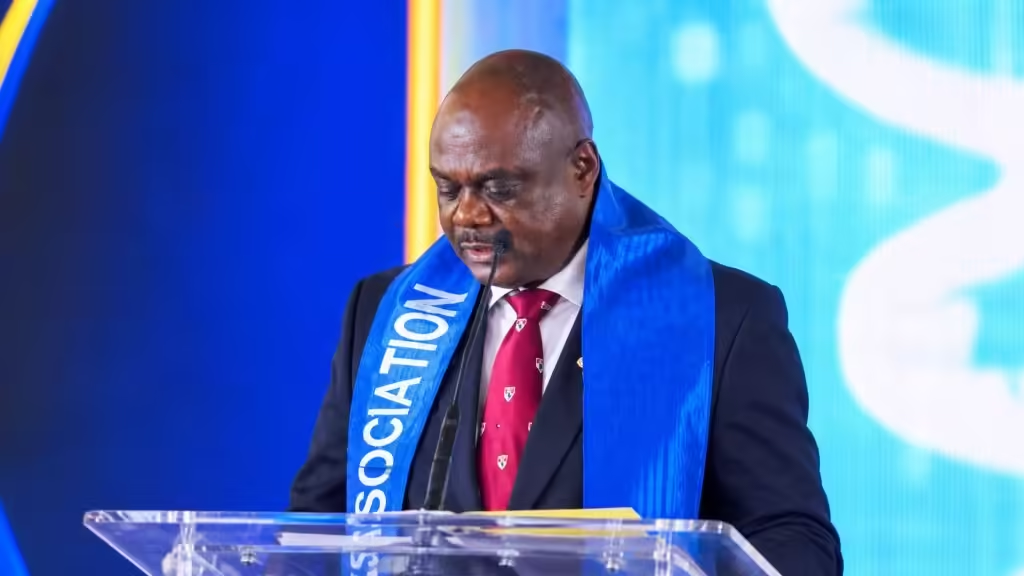
African Bar Association President High Chief Ibrahim Eddy Mark led the gathering, while veteran diplomat Professor Ibrahim Agboola Gambari, a former United Nations Under-Secretary-General, delivered the keynote address. Gambari emphasised that Africa’s development prospects depend on restoring constitutional governance, improving security, strengthening the rule of law and advancing continental economic integration. His message provided a foundation for the conference deliberations and the resolutions subsequently forwarded to Cabo Verde’s Acting President under a letter dated October 7.
Sudan and Eastern Congo: Ending Impunity and Protecting Civilians
The association expressed grave concern over atrocities in Darfur, urging the United Nations Security Council and African Union to take more decisive steps to protect civilians and support efforts to bring perpetrators of serious international crimes to justice. It called on African governments and parties to the Rome Statute to cooperate fully with the International Criminal Court, including through the execution of arrest warrants, provision of evidence and support for investigations.
The AFBA also encouraged victims of human rights violations to pursue available legal remedies under the African Charter on Human and Peoples’ Rights and other international legal instruments. It stressed that those responsible for atrocities must face accountability regardless of their political or military positions.
On eastern Democratic Republic of Congo, the association strongly condemned the offensive by the Rwanda-backed M23/AFC armed group and what it described as the involvement of Rwandan troops in military operations on Congolese territory. It raised concern over extrajudicial killings, sexual violence, child recruitment, attacks on schools and health facilities, and the displacement of millions of civilians.
The association also condemned the illegal exploitation and smuggling of Congolese minerals, including gold, coltan and cobalt, warning that illicit trade continues to fuel insecurity and undermine the country’s economic sovereignty. It demanded an immediate cessation of hostilities, unrestricted humanitarian access and renewed engagement in regional peace initiatives, while urging the Congolese government and other stakeholders to pursue inclusive dialogue addressing longstanding disputes over citizenship, land rights and governance.

Cameroon’s Anglophone Crisis: Demand for International Mediation
The African Bar Association took a firm position on the prolonged crisis in Cameroon’s North-West and South-West regions, condemning human rights violations attributed to both government security forces and armed separatist groups. It cited extrajudicial killings, arbitrary arrests, torture, sexual violence and attacks on schools, students, humanitarian workers and civilians as evidence of the continuing suffering caused by the conflict.
The association called for internationally mandated mediation to address the historical grievances, marginalisation and constitutional disputes underlying the crisis, including demands for greater autonomy or federalism. It also recommended establishing a comprehensive transitional justice mechanism to investigate atrocities, hold perpetrators accountable, provide reparations to victims and prevent future violations.
The resolutions come as the Anglophone crisis marks a decade since protests by lawyers and teachers in 2016 escalated into a wider confrontation. The AFBA’s intervention places renewed emphasis on a negotiated political settlement that addresses the underlying causes of the conflict while protecting civilians and restoring confidence in the justice system.
Rwanda: African Bar Association Demands Release of Victoire Ingabire
In one of its strongest country-specific resolutions, the association condemned what it described as the arbitrary detention of Rwandan opposition figure Victoire Ingabire Umuhoza and demanded her immediate and unconditional release. It raised concerns about her right to a fair trial, confidential legal assistance, freedom of expression and the presumption of innocence, calling on Rwanda to comply with its obligations under regional and international human rights instruments.
The AFBA committed to monitoring the proceedings, exploring observer participation and engaging Rwandan authorities through diplomatic and professional channels. It also mandated the presidents of the African Bar Association and Cabo Verde Bar Association to seek the intervention of Cabo Verde’s Acting President in discussions with the Rwandan government concerning Ingabire’s detention and access to legal counsel of her choice.
The association separately opposed proposals to transfer certain individuals detained, acquitted or released under the International Criminal Tribunal for Rwanda and its successor mechanism from Benin and Senegal to Rwanda. It also objected to transferring tribunal archives to Rwanda, arguing that the records should remain under United Nations custody or be placed in a neutral third country to preserve historical evidence and protect witnesses.
Reparations: Africa Must Move Beyond Symbolic Recognition
Reparative justice featured prominently in the conference resolutions, with the association demanding concrete international action to address the legacy of slavery, colonial exploitation and the removal of African cultural property. It endorsed African Union initiatives on reparations and argued that historical injustices require legal and financial remedies rather than symbolic expressions of regret.
The AFBA called for formal apologies at the level of heads of state, comprehensive debt relief for affected countries, the establishment of a Global Reparations Fund, compensation for economic and environmental damage, and the restitution of looted artefacts and ancestral remains. It also urged former colonial powers, European museums and private collectors to disclose the origins of African cultural objects in their possession and negotiate their return in good faith.
The association insisted that affected communities must participate directly in decisions concerning restitution and compensation, warning against arrangements that exclude those whose cultural heritage and historical rights are at stake. Its position reinforces the growing African campaign to place reparations firmly within international legal and policy discussions.
International Criminal Court: Protecting Judicial Independence
The African Bar Association expressed serious concern over political pressure directed at the International Criminal Court, particularly sanctions against judges, prosecutors and other personnel. It condemned measures that undermine judicial independence and warned against selective or politically motivated applications of international justice.
The communiqué also questioned disciplinary procedures involving ICC Prosecutor Karim Khan and called for reforms to guarantee fairness and institutional independence. While raising these concerns, the association urged African governments to continue cooperating with the court, honouring arrest warrants and supporting investigations into serious international crimes.
The AFBA further called for wider ratification of the Malabo Protocol, which seeks to expand Africa’s continental judicial framework to address international crimes. It acknowledged concerns about immunity provisions for serving heads of state and senior officials but maintained that stronger African judicial institutions could complement national courts and international accountability mechanisms.
Xenophobia, Terrorism and the Protection of Migrants
The association condemned xenophobic violence and discrimination against migrants, refugees and asylum seekers, citing incidents in South Africa, Tunisia and Kenya. It urged African governments to adopt fair immigration policies, prosecute perpetrators of xenophobic attacks and reject collective expulsions that expose vulnerable individuals to persecution or inhuman treatment.
On terrorism, the AFBA expressed concern over escalating attacks by extremist organisations operating across the Sahel and West Africa, including groups affiliated with al-Qaeda and the Islamic State. It supported stronger African-led counterterrorism cooperation but insisted that security operations must comply with international human rights and humanitarian law.
The association also called for predictable international financing for African peace support operations, greater protection for vulnerable communities and stronger efforts to prevent extremist recruitment. It stressed that military responses must be accompanied by accountable governance, improved education, public trust and stronger institutions if lasting security is to be achieved.

A Stronger Continental Role for African Lawyers
Beyond the immediate crises, the conference placed considerable emphasis on the responsibility of African lawyers to defend constitutional order, judicial independence and fundamental freedoms. Delegates called for closer cooperation among national bar associations, governments, regional institutions, civil society and international partners, alongside stronger anti-corruption measures and greater inclusion of women, children, displaced persons and other vulnerable groups in security and justice policies.
The association committed to sustained engagement beyond the Cabo Verde conference, including continued dialogue, partnerships and follow-up through its Human Rights Committee. The resolutions give the AFBA an ambitious agenda, although their ultimate significance will depend on the ability of its leadership and member associations to translate advocacy into practical engagement with governments and international institutions.
For High Chief Ibrahim Eddy Mark and the association’s leadership, the challenge now extends beyond identifying abuses and demanding accountability. With conflicts continuing to claim lives, political tensions testing constitutional institutions and historical injustices attracting renewed international attention, African lawyers face growing expectations to use their professional influence in defence of justice.
The Cabo Verde resolutions underline the association’s determination to make its voice heard on the continent’s most difficult questions. Whether addressing atrocities in Sudan, insecurity in eastern Congo, the Anglophone crisis in Cameroon or the treatment of political detainees, the African Bar Association has made clear that respect for human rights and the rule of law must remain central to Africa’s political stability and development.
Source: panafricanvisions.com