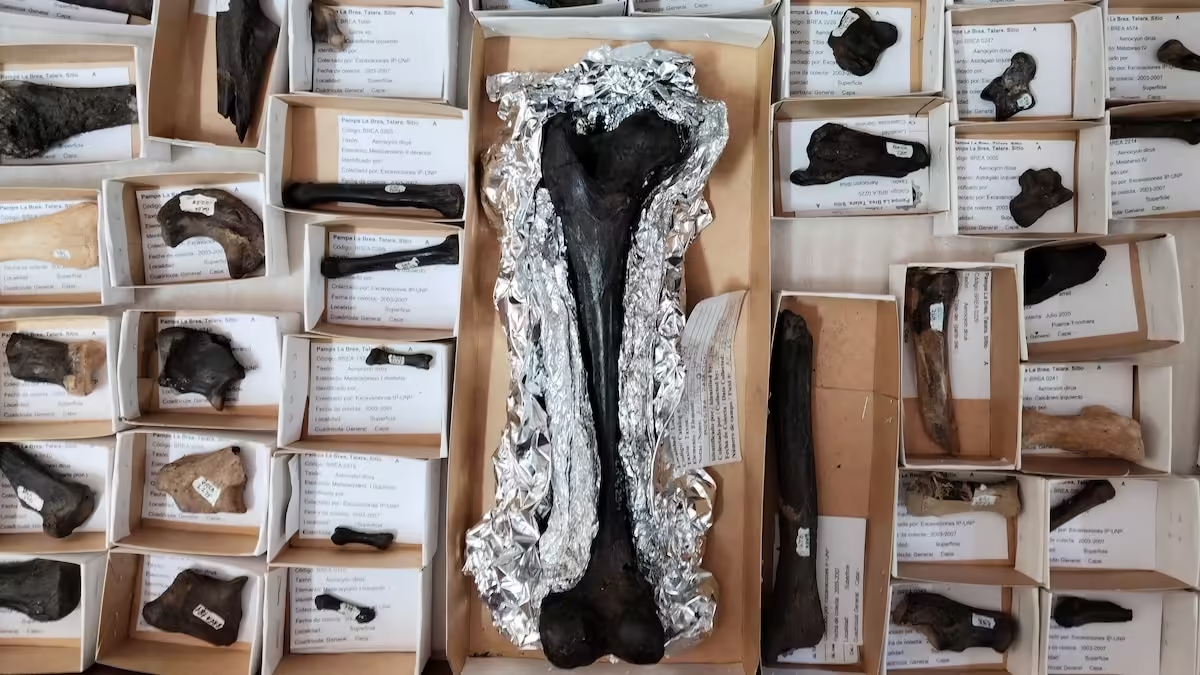

The team used small chisels and dental tools to remove some 300 fossils from the new tar pit, which may contain tens of thousands of bones. They encased larger specimens, like the pelvis and jaw of a giant ground sloth or the femur of a dire wolf, in foil and then layered them with wet strips of plaster medical bandages that hardened into protective casts. Meanwhile, they wrapped smaller specimens, like bird and reptile bones, in toilet paper for safe transport back to the lab. This new batch of fossils included several new rodent and bat specimens as well as the vertebrae of an arboreal snake that hints at the existence of forests at the site.
(Saber-tooth surprise: Fossils redraw picture of the fearsome big cat)
The clues inside the pit reveal that this windswept coastal desert was once a marshy wetland fringed with forests before receding glaciers transformed South America’s climate. To Jean-Noel Martinezthe director of the Institute of Paleontology and co-leader of the summer expedition, these fossils show that scientists are just scratching the surface of this site.
“These fossils provide more than a single snapshot in time,” he says, “they show that there is a much larger story to be told at Talara.”
Tar pits form when lighter elements of oil deposits evaporate and leave behind a sticky, sludge-like deposit of asphalt. These asphalt deposits are found across the world from Azerbaijan to Venezuela and are crucial resources for understanding past life. Lindsey, who leads an international research initiative at the La Brea Tar Pits to study asphalt seeps around the world, compares these sites to flypaper traps—anything that gets too close gets stuck.
Wearing blue gloves, a researcher carefully cleans and examines this black dire wolf femur that belonged to a predator caught in a sticky death trap 15,000 years ago. Jean-Noel Martinez
“At tar pits you find everything from elephant-size ground sloths to tiny insects,” she says. The ability to capture an entire cross-section of an ancient ecosystem makes them the ideal Ice Age time capsule.
But not all tar pits accumulate bones in the same way. Some covered the buried remains of animals that died well before the asphalt seeped out of the ground. Others, like La Brea, actively entrapped animals that got too close and added to their kill count as carnivores came to scavenge the carcasses. Talara’s tar pits worked the same way, capturing hungry predators that got stuck while pursuing an easy meal. Nearly 80 percent of the mammal fossils excavated here in 1958 belonged to just eight species of carnivores, including dire wolves, Smilodon cats, giant jaguars, and pumas.
These prehistoric predators drew paleontologist Gordon Edmund, a longtime curator at the ROM, here nearly 70 years ago. A Canadian geologist working at a Talara refinery sent Edmund the first batch of fossils the road crew unearthed. Intrigued by the quality of the blackened bones, Edmund petitioned to halt the highway construction and organized an expedition.
With help from local Peruvian excavators and bulldozers, Edmund’s team cleared several feet of tar-soaked sediment to reach the bones below. Over a single month, the team excavated more than 28,000 bones. The expedition drew international attention with the New York Times reporting that the paleontologists had unearthed everything from “the three-foot thigh bone of a mastodon to the tiny, purple sheened leg of an ancient beetle.”
(The world’s first saber-toothed cat mummy has been found in Siberia)
Source: www.nationalgeographic.com