
New York City cinema is an extensive canon of films lovingly set in the city that never sleeps, often made by filmmakers with deep roots in at least one of the five boroughs. Martin Scorsese (Taxi Driver, After Hoursetc.), Nora Ephron (When Harry Met Sally…, You’ve Got Mailetc.), and Noah Baumbach (Frances Ha, The Squid and the Whaleetc.) are just a few examples of artists who notably have come from and paid homage to the city. A film shot in New York — and not a substitute city like Toronto or Vancouver — has a special personality and lends itself to a multitude of genres, from romantic comedy to crime thriller.
I submit actor-writer-director Noah Segan’s sophomore feature film, The Only Living Pickpocket in New York (2026)for entry into this esteemed category — if the title wasn’t enough of an indication, the very first scene introduces the tone-setting needledrop of “New York, I Love You but You’re Bringing Me Down” by LCD Soundsystem. This is a story taking place in the streets and subways of New York, and it wants you to embrace that.
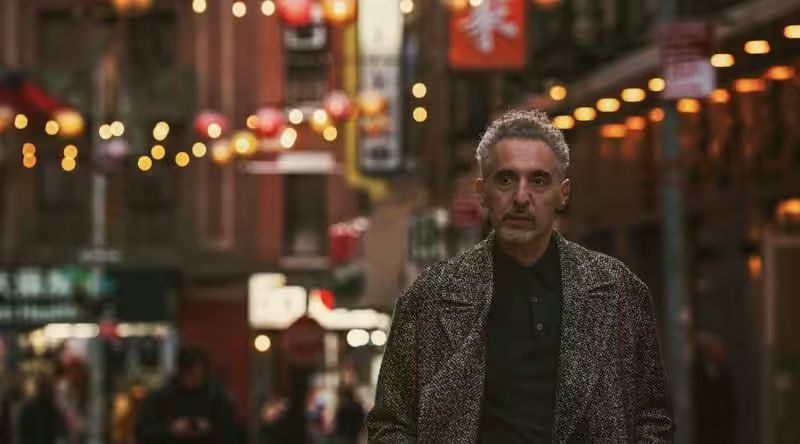
Harry Lehman (John Turturro) is an older New Yorker who lives in The Bronx with his disabled, nonverbal wife Rosie (Karina Arroyave). As far as the viewer can understand, Harry has always made a living from the classic crime of pickpocketing. When he clocks in for his shift — wearing a cozy-looking cashmere coat and accompanied by a classy ’70s-inspired score — he spends the day riding public transportation and patrolling the sidewalk, looking for his next mark. On a good day, he earns a few hundred bucks from selling his haul to longtime friend and pawn shop owner Ben (Steve Buscemi). While more stylized crime movies depict pickpockets as magician-like swindlers, this is a realistic portrait of a man who has only ever known this method of making a living.
Tough times have hit the once-booming thief economy; Harry finds it harder and harder to come across lucrative victims because nobody carries cash or priceless heirlooms anymore — only credit cards that can be easily cancelled. He also doesn’t own a cell phone and refuses to bow down to the endless complications of modern technology, which means that a more contemporary approach to his craft is out of the question. This sets up a fascinating character study of a man struggling to adapt to the ever-changing world around him.
Harry gets an unsavory taste of this evolving way of life when he accidentally steals (and later discards) a USB crypto wallet from Dylan (Will Price), a spoiled Generation Z Ivy League brat who happens to be part of a powerful criminal family. Using his limitless connections, Dylan quickly finds Harry and tasks him with retrieving the device lest Rosie be harmed. This is a noteworthy reversal of a common trope; instead of a younger character being threatened by older, hardened thugs, our protagonist is an old thief facing pressure from a newer generation of delinquents who are backed by an unfathomable force. As a primary antagonist, Dylan is far from physically intimidating. He’s an obnoxious, vape-hitting kid. This partially undermines the sense of urgency in the plot — the stakes of the film are told to us rather than shown — but he represents something more substantial than your typical crowbar-wielding ruffian: inherited power and a new criminal underbelly that Harry cannot comprehend.
In his search for the USB that takes him to such places as Chinatown, Brooklyn and Queens, Harry must reckon with his own relationships. He receives aid from Allan (Giancarlo Esposito), an aging police detective who similarly feels out of place in this new New York. We also meet Harry’s estranged daughter, Kelly (Tatiana Maslany), in a scene unfortunately devoid of emotional resonance. Perhaps it’s the indistinct dialogue about Harry’s absence in her life or the fact that it plays more like a brief afterthought than the core pathos of the film, but I found this subplot entirely uncompelling. It asks the viewer to accept a backstory for Harry that seems entirely alien given what we know about him, then neglects to reconcile this contradiction.
On that same note, the final moments leave a bittersweet impression. Harry’s fate becomes fairly clear early on in the movie, and Segan does nothing to challenge that expectation; he is more concerned with resolving Harry’s relationship with Rosie, which I would argue is the strongest element of this third act. In a climatic car ride scene, Harry exchanges clichéd remarks with a new character, Moira (Jamie Lee Curtis), about the world becoming more complicated while interspliced flashbacks show a completely telegraphed reveal — a reveal that attempts to deliver us the catharsis we crave from this kind of story, but does so without considering the broader ramifications it would have in this universe. As a result, our departure from Harry’s story is far from fulfilling.
Although The Only Living Pickpocket in New York may not stick the landing, this 88-minute addition to the “love letter to New York City” subgenre is brisk and anchored by John Turturro’s tender, reflective leading performance. His understated line deliveries are to the film’s benefit, especially in scenes where a lesser performer would have gone for the Oscar clip. It’s less of a thriller and more of an intimate journey around New York with an eccentric but realistic character, aided by an assortment of accomplished supporting actors (who don’t get much to do, but it’s nice to spend time with them regardless). And frankly, it would be quite difficult to make a film about a one-of-a-kind protagonist meandering through a city set to a jazzy score and have it not be at least somewhat enthralling.
Colton Sears is a member of the Class of 2028 in the Nolan School of Hotel Administration. He is a staff writer for the Arts & Culture department and can be reached at [email protected].
Read More
Source: www.cornellsun.com