
Get your daily dose of health and medicine every weekday with STAT’s free newsletter Morning Rounds. Sign up here.
We’ve got great stories below that flesh out the implications of the Democrats’ rout in the midterm elections. But if you’re short on time, this meme sums it up well.
The fallout from the blue tsunami
Democrats’ landslide victory in the midterm elections will have dramatic implications for Americans’ health care, but we’re still waiting for several races to be called. You can read all of our ongoing coverage here.
If you’re looking for the early takeaways, STAT’s Chelsea Cirruzzo has an excellent primer. Reversing Medicaid cuts? Undoing an anti-vaccine agenda? “Medicare for All”? Chelsea’s story will get you started. And if you want to hear it straight from the donkey’s mouth, Congressional Democrats penned a memo in September that laid out how they plan to undo the Trump administration’s health care policies.
Below are the big stories we’ll be watching in the coming weeks and months.
MAHA at a crossroads
Tuesday was a rough night for the Make America Healthy Again movement. And as the dust settles, it’s become even more clear the electorate is not just uninterested in their and the Trump administration’s health agenda, but actively rebuking it. Even MAHA’s jewel of a candidate, Republican Zach Lahn in Iowa, lost by more than 10 points.
Is this the end for MAHA, which now must fight for political purchase amidst new Democratic senators, representatives, and governors largely opposed to their policies?
STAT’s Isabella Cueto lays out the three paths she sees for the young coalition. Read more.
The health care experts who will soon fill Congress
The last time Congressional Democrats included a practicing physician, Franklin Delano Roosevelt was president. Eighty-eight years later, medical professionals won dramatic victories as part of the sweeping blue wave that handed Democrats control of Congress and many state and local offices.
Epidemiologist Abdul El-Sayed won a Michigan Senate seat, joining pediatrician Annie Andrews from South Carolinas. And as we flagged yesterday, Ohio’s newly elected governor, physician Amy Acton, was the state’s pandemic-era health director.
All told, more than 500 Democratic doctors, nurses, scientists, and others with backgrounds in public health ran for office nationwide. STAT’s Sarah Todd and Anil Oza break down the flood of medical professionals into office — and what they plan to do with their power.
Bernie Sanders takes center stage
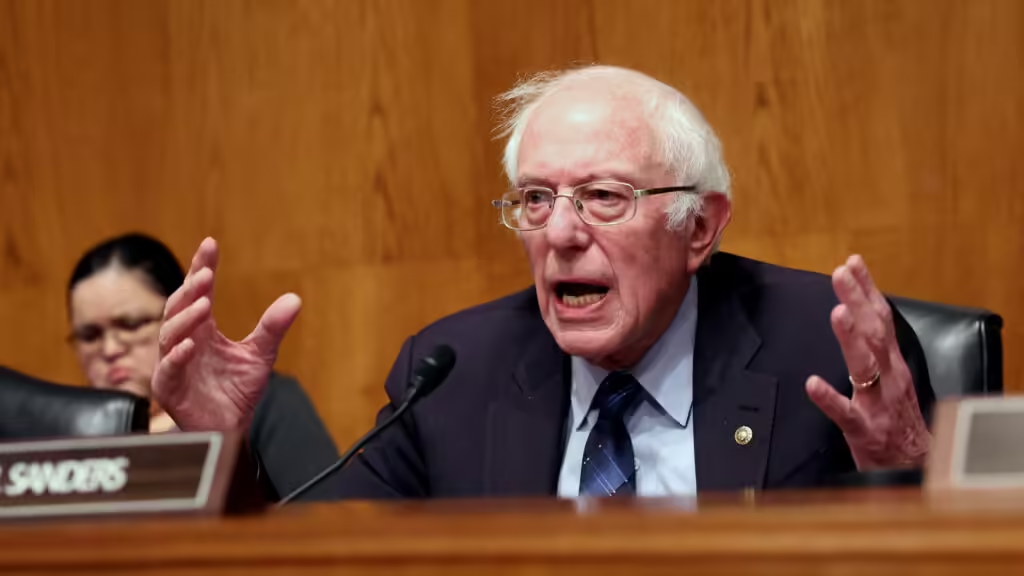
Sen. Bernie Sanders, the longtime Independent from Vermont, has led many political lives. His next act? Shaking up the Food and Drug Administration.
The FDA funds its reviews of medicines by collecting user fees from pharmaceutical companies. Sanders, a longtime critic of this funding mechanism, is likely to lead the Senate’s health committee, which could grant him a chance to fundamentally alter how the FDA interacts with the companies it regulates. Experts expect him to adopt a much tougher stance towards the pharmaceutical industry, especially as Americans have pushed lawmakers to lower drug prices.
Read more from STAT’s Margaret Manto. And then read John Wilkerson’s story about how Sanders and another influential senator might breathe life into efforts to create a single-payer health care system.
China slows rare disease trials after deaths
Over the last decade, Chinese hospitals became sophisticated centers for diagnosing and treating rare diseases. But patient deaths and new government rules have slowed the flood of trials into a trickle.
Since May, 164 trials have been approved under the new rules, out of just over 1,000 that have been submitted. And only one of the studies approved is listed as a gene therapy or gene editing program for a rare genetic disease. Prior rules had enabled Chinese companies to test drugs in humans faster and cheaper, and their success had prompted U.S. companies to either come to China or push the FDA to adopt a similar approach.
Jason Mast with another insightful look at how China’s policies are upending the global biotech industry.
CVS gets a divorce
CVS is splitting up, turning one of the country’s largest health care conglomerates into separate companies that will both keep the CVS branding: CVS Health and CVS Pharmacy.
CVS officials said political factors did not influence the surprising separation, though the move was announced as Democrats swept control of Congress, and state and federal lawmakers have pushed to break up companies like CVS and UnitedHealth Group over concerns that they use their size and vertical integration to overcharge patients and employers.
STAT’s Bob Herman has the rundown on the terms of this divorce, including who got the dog, the kids, and the house.
What we’re reading
Source: www.statnews.com