
Honda Sensing Ride shows driver-assistance know-how from cars crossing to two wheels, where rider behaviour sets different limits
Honda has used EICMA 2026 in Milan as the world debut for Honda Sensing Ride, a radar-based safety and rider-assistance system for motorcycles adapted from the Honda Sensing technology in its cars. The 2027 model-year CRF1150L Africa Twin Adventure Sports, also unveiled at the show, will be first to carry it, with further models set to follow.
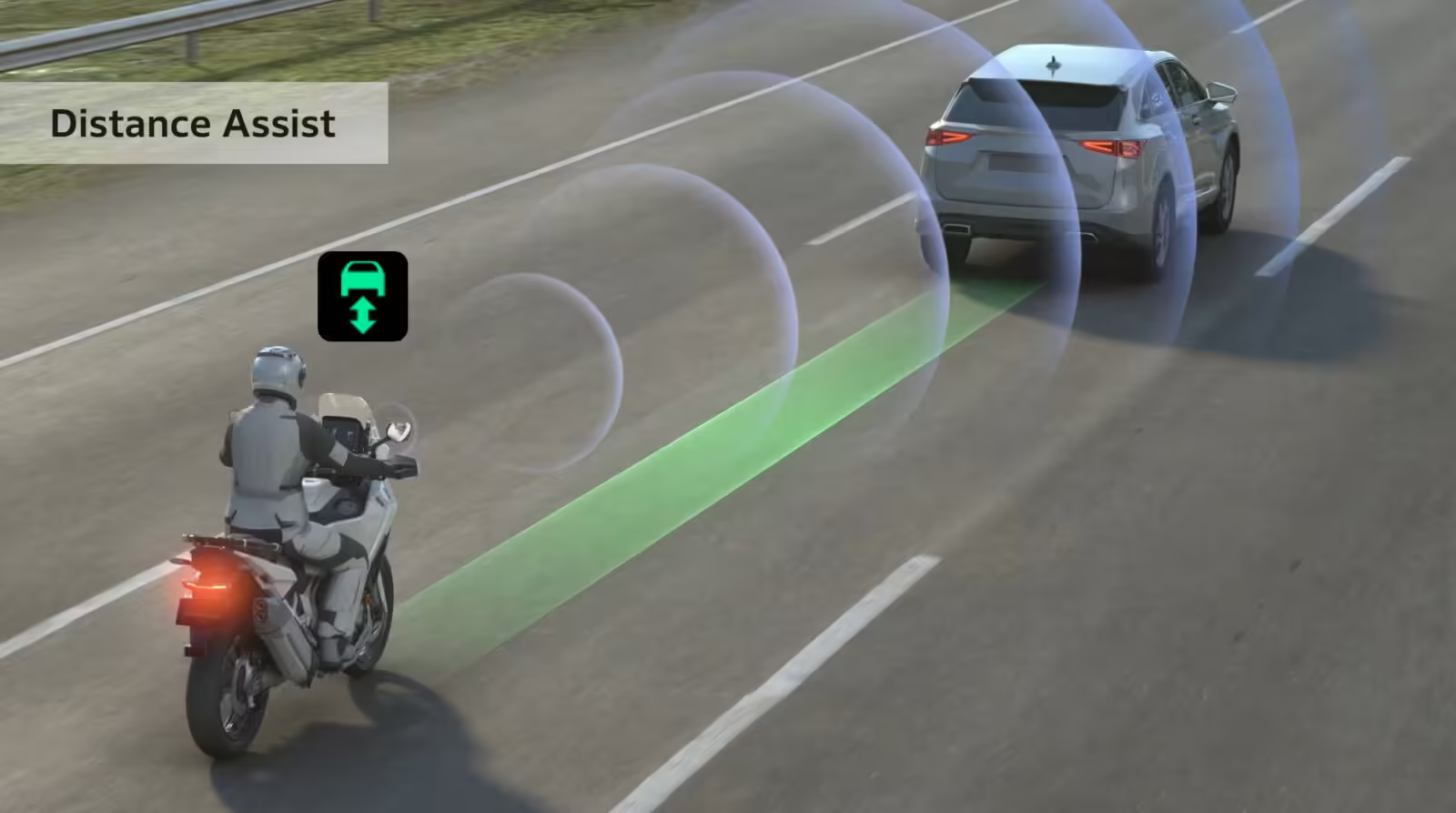
Millimetre-wave radar units front and rear track the bike’s surroundings, and the system judges the state of rider and machine before issuing alerts or stepping in. Its 10 functions include adaptive cruise control (ACC), emergency brake assist, forward and rear collision warnings and blind spot alerts shown on the mirrors.
Group Ride Assist, built specifically for motorcycles, keeps spacing between riders, including in staggered formation. ACC with Stop & Go works with Honda’s dual-clutch transmission to halt the bike and pull away again in heavy traffic without clutch input.
That gearbox, which Honda first fitted to motorcycles in 2010, makes the full stop-start cycle possible. The launch also extends a safety programme spanning both vehicle businesses. Honda aims to halve deaths in collisions involving its motorcycles and cars by 2030 against 2020, measured per 10,000 units sold, and reach zero by 2050.
Honda notes the functions are aids with limited recognition and control capability. Road, weather and vehicle conditions can stop them working as intended, so riders must stay attentive.
Why this matters:
- DCT gives Honda a differentiator. Ducati, BMW and KTM reached radar-based rider assistance first, but pairing ACC Stop & Go with Honda’s dual-clutch transmission enables full stop-start assistance that manual gearboxes struggle to match.
- Braking stays with the rider. Emergency Brake Assist acts only on the rider’s own braking input, reflecting the stability risk of automatic braking on two wheels and limiting how far car-style automation can transfer to motorcycles.
- Scale could reach high-fatality markets. As the world’s largest motorcycle maker, Honda could bring radar safety to the mass-market models used across Asia, where most motorcycle deaths occur, though cost will decide how far it moves beyond premium adventure bikes.
Source: www.automotiveworld.com