
Click here to download the JINSA Insight.
After the midterm elections on November 3, a lame-duck Congress will return to Washington and begin to close out the 119th Congress. One key, must-pass bill still requiring congressional attention is this year’s National Defense Authorization Act (NDAA), which frames U.S. national security policy across a broad spectrum of defense issues. While the NDAA includes multiple provisions impacting U.S. security interests in the Middle East, none has proven more contentious this year than the proposed “United States-Israel Defense Technology Cooperation Initiative” (commonly referred to as “Section 219”).
Critics in Congress ludicrously contend this provision is “an existential threat to American sovereignty and democracy” that will “merge” or “integrate” the American and Israeli militaries. The opposition to Section 219—which, if passed, would do little more than expand U.S.-Israel cooperation that is already ongoing—is a bad omen. It suggests that the final NDAA approval process, which requires significant bicameral and bipartisan compromise, could be more contentious than usual. More broadly, the current wrangling over Section 219 could very well serve as the kickoff to a larger debate about the value of the U.S.-Israel strategic partnership in both the lead-up to the expiration of the current 10-year U.S.-Israel Memorandum of Understanding in 2028 and the upcoming presidential election cycle.
Far from being a “threat,” cooperation with Israel is an invaluable asset to the United States. Nowhere is this value proposition clearer than in the potential to take advantage of the subterranean warfare expertise Israel gained in the Gaza Strip, where it fought an enemy that operationalized the subterranean domain on an unprecedented scale. Israeli lessons learned from combating an adversary, Hamas, that conducted tactical maneuver, command-and-control, logistics, and resupply largely underground are of considerable importance to the United States.
Section 219 Overview
One section of the FY2027 NDAA has received more attention than the other roughly 4,700 provisions, both because it contains the word “Israel” and because its critics have mischaracterized its actual substance. Section 219 in the House-passed version of the defense bill (Section 1217 in the Senate Armed Services Committee-passed version) directs the Pentagon to create a U.S.-Israel Defense Technology Cooperation Initiative to expand and accelerate bilateral research, development, testing, evaluation (RDT&E), and other forms of cooperation on defense technologies.
As JINSA first explained in July, when the NDAA was being debated, this new initiative would benefit American warfighters by taking advantage of Israel’s extensive development of, and combat experience with, cutting-edge defense technologies and systems. The House version proposes to do so by designating an executive agent to identify and advance these opportunities. Much of this entails the modest, but crucial, step of ensuring effective coordination among the many existing components within the Pentagon already tasked with carrying out parts of long-established technological cooperation with Israel. No specific U.S.-Israel defense cooperation on any project is mandated by either version of the bill, but the new initiative would likely build on the ongoing work of the U.S.-Israel Operations Technology Working Group (OTWG), which was previously authorized in the FY2021 NDAA. The OTWG is a joint body of Pentagon and Israeli Defense Ministry leaders tasked with identifying and advancing solutions to shared national security threats.
Decades of joint U.S.-Israel cooperation have already resulted in world-leading technologies, such as the Arrow, David’s Sling, and Iron Dome systems. This provision would build on that existing cooperation to ensure that the United States benefits from the next generation of emerging technologies that Israel is already pioneering, particularly in countering threats below and above ground.
Elevating Cooperation Against Threats Below…
Israel’s achievements in air and missile defense using systems co-developed and co-produced with the United States logically command much attention within this larger issue of bilateral technological cooperation. But cooperation on subterranean warfare is a key, and currently underappreciated, area where the NDAA’s provision could directly benefit U.S. national security.
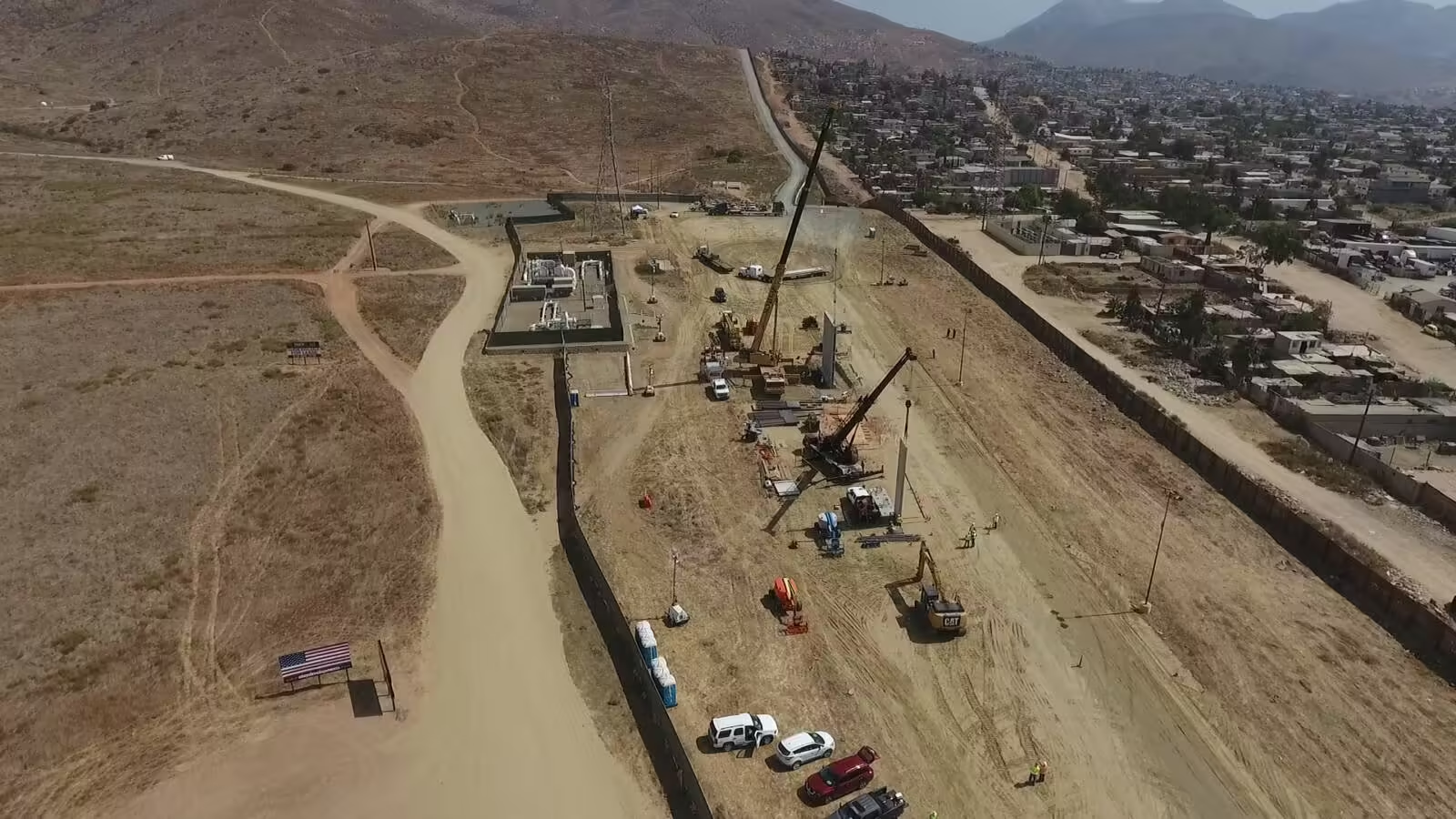
U.S.-Mexico border tunnels facilitate illicit drug flows into America, enable dangerous actors to enter the United States, and could permit terrorist groups to stage cross-border attacks on the U.S. homeland. This should worry policymakers in Washington, especially as large tunnels continue to be uncovered along the border near major American cities like El Paso and San Diego. Most recently, in June 2026, authorities found an advanced, 1,800-foot-long cross-border tunnel just 15 minutes from downtown San Diego. According to Mexican security officials, the hidden passageway, which contained a rail line, was likely a major trafficking hub for drugs, explosives, and firearms.
Nor is the underground threat to the U.S. homeland new. More than 230 cross-border tunnels have been discovered along America’s perimeter over the past three decades. General Victor Renuart, USAF (ret.), former U.S. Northern Command (NORTHCOM) commander, pinpointed border tunnels as being at the top of his list of threats to NORTHCOM’s core mission of homeland defense. U.S. Border Patrol estimates that between 20 and 40 undiscovered tunnels may be in active operation under the border right now.
As a new JINSA report explains, security along America’s southern border in particular would stand to benefit significantly from Israel’s hard-won subterranean expertise. Over the last year-plus, the U.S. military has stood up the Joint Task Force-Southern Border, added physical border walls, and increased anti-unmanned-aerial-system (counter-UAS) platforms to combat drone activity from cartels. Nearly 380 hostile drones were detected along the border in just a one-month span in August–September 2026. The U.S. military is now using a range of advanced tools, including electronic warfare (EW) and directed energy systems, to intercept cartel drones overflying the border. Yet those measures do not address the underground threat, which remains a steep challenge for American authorities, particularly when it comes to detection.
Uniquely among modern countries, Israel has made enormous strides towards addressing the tunnel threat. Israel has pioneered new ways to detect, map, and neutralize even the most advanced underground threats. Across Gaza and southern Lebanon, Israel has destroyed dozens of miles of enemy tunnels and rendered many more inoperable. As one former senior Israeli military official told JINSA, Israel had minimal subterranean capabilities a decade ago but is now a world leader in cutting-edge tunnel detection and neutralization technologies.
Israel also can help the United States with structural organization to address subterranean threats. Israel has developed a system to fuse sensor data and create a real-time map of underground threats. Additionally, it has innovated new technologies, tactics, and techniques for mapping, navigating, and communicating inside enemy tunnels. Israel also has developed and employed highly effective methods for sealing, flooding, and detonating enemy tunnels.
The NDAA’s proposal helps lay the foundation for bridging Israel’s high-tech solutions and American homeland security problems. The provision to establish an entity tasked with “identifying jointly developed or Israeli-origin technologies with operational utility for potential integration into United States systems” offers a pathway for Israeli sensor fusion centers—now active on Israel’s borders with Gaza and Lebanon—to assist the Department of Homeland Security with locating and defeating underground border threats. Additionally, the NDAA provision’s language expanding “joint training exercises” between U.S. and Israeli forces on priorities like “anti-tunneling and subterranean threats” provides an important opportunity.
…and Threats Above
In addition, Israeli air and missile defense technologies, and counter-drone systems, offer tremendous promise for helping secure U.S. skies, and American forces and military assets overseas, from Iran-led projectile threats like those seen in Operation Epic Fury.
The provision alludes to potential Israeli involvement in America’s ambitious Golden Dome air and missile defense project where appropriate, which, according to JINSA projections, could reduce the planned system’s costs and increase its effectiveness. JINSA’s July report, The Missing Shield, assessed that, for Golden Dome, supplementing U.S. Patriot PAC-3 defenses with Israel’s David’s Sling system would more than quadruple its defensive range while reducing system costs by an estimated 75 percent. For higher-altitude threats, augmenting America’s Terminal High Altitude Area Defense (THAAD) with Israel’s Arrow-3 would boost range by over 1,100 percent.
Moreover, Israel has become a world pioneer in using cutting-edge means, like directed energy and microwave technologies, to defeat drone threats. Relevant systems include:
- The Iron Beam directed energy laser system, which can defeat inbound threats at minimal cost—helping preserve scarce, multi-million-dollar kinetic interceptors—and which, as a prototype, intercepted at least 25 Hezbollah drones in real-world combat.
- The Smart Shooter SMASH system, which turns rifles into effective drone interception platforms and which the Pentagon recently purchased in large quantities.
- The HYPNOSIS mass jamming soft-kill system, which is used to counter drone swarms.
- The D-Fend radio frequency-based interception system that is deployed at U.S. military sites and airports.
- Acoustic sensor technologies that could dramatically increase America’s ability to detect drones.
Israel recently unveiled more innovations that can directly aid America’s homeland defense. This month, Israel’s defense industry revealed the Fire Storm 250, a drone equipped with a machine gun to rapidly down enemy drones, and the HawkGuard, which can stall adversary drones’ movements with a high-powered net, reducing risks to civilians compared to kinetic interceptors. All this is due to “Israel’s culture of defense innovation,” which places it at the outer frontier of military advancements worldwide, according to Vice Admiral (ret.) Mark Fox, the U.S. Navy’s former chief of strategy and a JINSA Generals and Admirals Program participant. It is also why, he has argued, U.S.-Israel cooperation gives America a huge boost in the race to “out-learn and out-adapt” its adversaries.
The Straw Man of U.S.-Israel “Integration”
Rather than debate the potential benefits of taking advantage of work Israel is already doing, critics seize on the imagined dangers of closer bilateral cooperation by misrepresenting what the provision would, and would not, do. Among other critics, Rep. Rashida Tlaib (D-MI) said the legislation would “deeply integrate the U.S. and Israeli militaries,” Rep. Ro Khanna (D-CA) argued it would “integrate our military with Israel’s,” and Sen. Bernie Moreno (R-OH) colorfully stated, “I don’t think we should integrate our military with anybody, not even the Bahamas.”
The truth is that the provision’s scope is far less dramatic. As the provision’s authors and its actual text state, the real meaning of the word “integration” is much narrower than critics claim, limited strictly to enabling the United States to integrate certain Israeli technologies into U.S. systems, programs of record, and acquisition pipelines. Both the chairman and ranking member of the House Armed Services Committee have reiterated this point explicitly.
The proposal does not integrate troop formations, yield command authority of American troops to Israel (or vice versa), or create any new joint military command — all of which would be required for “merging” militaries. Nor does it enable the unconstrained sharing of sensitive intelligence or technology, as critics have charged. For example, an opponent claimed that if the provision becomes law, “[U.S.] intelligence feeds could end up permanently flowing into Israel’s systems.” To the contrary, it requires that joint efforts be conducted “in a manner that protects sensitive technology and information and the national security interests of the United States.”
This initiative’s critics have made the provision into a bogeyman that, they say, will force the American and Israeli militaries into a single entity. Nothing could be further from the truth. What it would do is strengthen the strategic cooperation which has provided tangible benefits for American security and helps protect the U.S. homeland.
Source: jinsa.org