
The Academy plans to keep taking the Oscars global, from recruiting members in underrepresented countries to streaming the ceremony free on YouTube, its leadership said in Tokyo, where CEO Bill Kramer said the share of members living outside the U.S. has grown from around 5% to 25% in a decade.
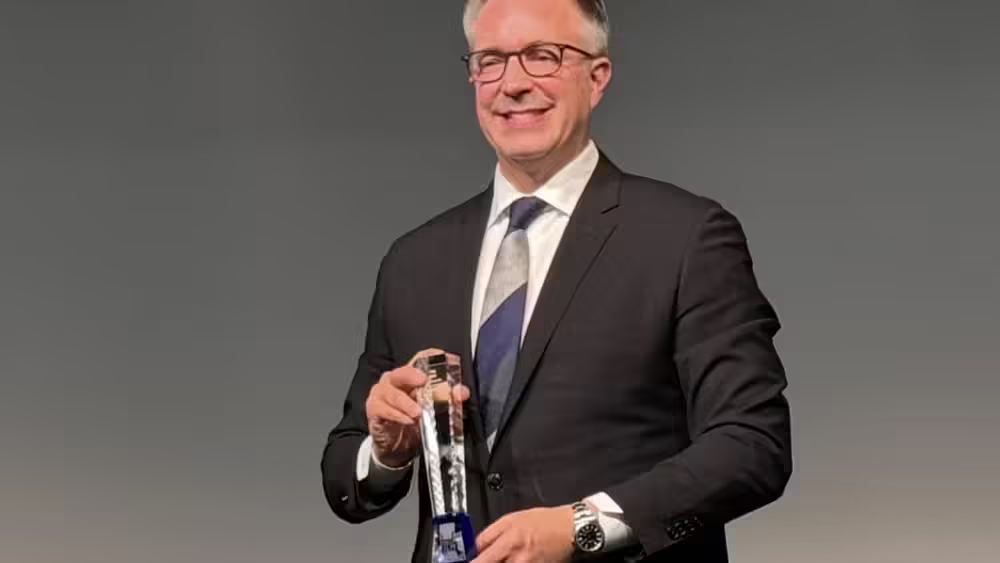
Kramer was speaking at an Academy in Tokyo panel at the Tokyo International Film Festival alongside Academy president Lynette Howell Taylor and chief membership, impact and industry officer Meredith Shea, moderated by festival director Hisamatsu Takeo. The festival also presented Kramer with its Global Cinema Leadership Special Award.
Kramer described the membership shift as part of a push for a more diverse and inclusive Academy. A decade ago, he said, only 5% to 6% of members were based outside the U.S. “Now it’s 25%, and that number is growing.” The Academy has about 70 members in Japan.
“People are making movies around the world, people are watching films that are not in their native language more and more,” Kramer said. “We’re making movies everywhere, we’re viewing movies in a much more nimble and accessible way, and the Academy needs to reflect that.”
Kramer pointed out that every category at the most recent Oscars had international representation, including best picture. “Of course, everybody remembers the moment when ‘Parasite’ won. It was sort of a pivot, a shift, I think, in our thinking about what was possible with global cinema at the Oscars, and that continues,” he said, referring to Bong Joon Ho’s 2020 best picture winner.
Howell Taylor explained that besides Oscar nominees, who are automatically put forward, and candidates sponsored by existing members, each branch has an Aperture committee charged with finding filmmakers around the world. “And each year, we have very specific focus for countries that are potentially underrepresented,” she said.
During the audience Q&A, Howell Taylor said: “Just because the membership has increased does not mean that the qualifications have somehow decreased. Our membership was smaller because we were not as global, and we weren’t looking for excellence in filmmakers as much outside of the U.S.”
Over the past couple of years, the Academy has visited India, London, Rio, Morelia, Marrakech and Busan. “We’re thrilled to be here in Tokyo, and you’ll be seeing us do that more and more,” Kramer said, adding that the Academy’s city-by-city member events will continue “all over the world.” This was, he said, the Academy’s “first official Academy trip to the Tokyo Film Festival, but it won’t be our last.”
Being Academy president, Howell Taylor said, “is an incredible privilege because I get to meet storytellers all around the world in this position.” She added: “I carry all the conversations that I have at various film festivals and member gatherings back to L.A. And it’s so crucial to take those conversations and that information because it really does shape the work that the Board does and how our organization moves forward.”
Shea noted that submitting a film for Oscar consideration costs nothing in any category, more than 200 festival awards make short films automatically eligible, and members can watch contenders on the Academy Screening Room app. “That’s our deep commitment to global cinema, that we don’t want individuals to feel like it’s not open, that it is just an L.A.-based, Hollywood-centric organization. The Academy is global, and it welcomes all filmmakers,” she said.
A major step toward a worldwide audience comes with the Oscars’ move to YouTube, where Kramer said the ceremony will be available free to 2.5 billion people in more than 30 languages from 2029. “So, for the first time, everyone around the world will have access to the show at the same time in the same format. And that is a huge, intentional move by the Academy to reach a bigger global audience,” he said.
Asked whether the Tokyo International Film Festival could join the six festivals whose top prizes now qualify films for the international feature race, Kramer said: “We’re looking to expand the number of festivals that help films qualify for the International Feature Film category. That’s a process that we’re undertaking this year, so stay tuned for more information on that.”
In a later answer, Kramer said the first six were chosen in large part on “the timing on the calendar,” and that the Academy is “just beginning these conversations.” Howell Taylor said discussions about expanding the list are “ongoing right now.”
Asked whether the category could one day become redundant as the Academy grows more international, Kramer said: “Right now, I don’t see that category as being redundant.”
Animation is another area where the Academy’s global reach shows. Shea, who ran the animated feature category for more than a decade, said submissions grew from 12 to close to 40 over that period, with at least six anime titles a year. “Japan has such a deep history of animated filmmaking,” said Kramer, who added that the Academy’s globalization “is good for all filmmakers, including Japanese filmmakers.”
Speaking separately with Variety in Tokyo, Kramer, Howell Taylor, Shea and Academy Museum director and president Amy Homma also discussed AI, the festival route into the international feature race and the 2029 YouTube ceremony.
In his closing remarks, Kramer said: “I’m always struck on these trips, and this is no exception, by the warmth, by the sense of community, by the sense of collaboration, and how we all speak the same cinema language. And it’s very heartening, especially in this moment of a lot of global complications and complexities.”
Source: variety.com