
Iran says seven oil tankers have caught fire or sustained damage in and around the Strait of Hormuz as its Islamic Revolutionary Guard Corps (IRGC) warns that renewed US attacks could trigger a wider response and the world braces for the possibility of renewed hostilities.
Although analysts consider a US attack before the November 3 midterm elections unlikely, sabre-rattling on both sides has raised fears that escalating rhetoric could give way to renewed attacks with control of the Strait of Hormuz and Iranian nuclear facilities at the heart of the conflict.
Recommended Stories
list of 4 itemsend of list
But the critical Gulf waterway, through which one-fifth of global oil and liquefied natural gas supplies were shipped before the war, was not even an issue before the United States and Israel first launched strikes on Iran on February 28. Furthermore, talks over Iran’s nuclear programme were under way at the time.
As the US wrestles with depleted defensive weapons stocks and a global energy crisis mounts, how does the land lie now before potential renewed strikes and how does it differ from February before any of this began?
Here is what we know:
How has the geography of the war changed?
Unlike in February before the war began, the US and Iran would be fighting it out on several different fronts if attacks resume.
Iran’s regional allies and Lebanon
While the objective of US-Israeli strikes on Iran was initially to topple its leadership, another aim was to weaken Iran’s regional allies, including Hamas and Hezbollah. Announcing the offensive, Trump pledged to prevent Tehran-backed groups from attacking US forces and destabilising the region.
While the offensive failed to force a change in Iran’s government, Hamas has been severely weakened as Israel continues to attack Gaza – with more than 1,400 Palestinians killed since a US-backed “ceasefire” was announced in October last year.
Hezbollah’s retaliation against targets in northern Israel after the killing of Iranian Supreme Leader Ali Khamenei in the first US-Israeli air strikes brought Lebanon into the war in early March.
Israel launched a bombing campaign against sites in southern Lebanon and the suburbs of Beirut it considers Hezbollah strongholds and, at one point, occupied about one-fifth of the country, displacing more than one million people. It still occupies significant land on Lebanon’s southern border.
Waterways, energy facilities now battlegrounds
The biggest geographical change, however, has been the emergence of the Gulf’s waterways and energy infrastructure as key targets. Iranian attacks on US military assets and civilian infrastructure have exposed Gulf countries to the consequences of a war they had hoped to avoid.
Urban Coningham, a research fellow at the Royal United Services Institute, told Al Jazeera: “US-Iran negotiations had previously centred on Iran’s regional allies and nuclear programme. The Strait of Hormuz and attacks on the Gulf have now become central points of contention.”
While the Gulf has experienced attacks before, Coningham said the scale and “velocity” of recent Iranian strikes, including on oil and gas infrastructure, have marked a significant shift.
The Strait of Hormuz between Iran and Oman, which had been freely open to international shipping before the war, now gives Tehran a means of imposing costs far beyond its borders. Iran continues to threaten and attack shipping there while the US maintains its own blockade of Iranian ports. Traffic has been severely disrupted and supplies of oil and gas have been sharply reduced.
In March, CNN reported that the Pentagon and US National Security Council had significantly underestimated Iran’s willingness to restrict passage through the strait and the consequences of that. Defence Secretary Pete Hegseth rejected the reporting, insisting the military had planned for that possibility.
Renewed fighting in Yemen
Renewed fighting between the forces of the Saudi-backed, internationally recognised government of Yemen and the Iran-backed Houthis has added another front to the regional crisis. Yemen’s war has expanded to Saudi Arabia as Houthi missile and drone attacks target Saudi airports and oil infrastructure.
This front has brought another trade chokepoint into sharper focus – Bab al-Mandeb, the strait that links the Red Sea to the Gulf of Aden. Houthi threats against Saudi-linked shipping there could compound transportation disruptions in Hormuz, undermine efforts to move Gulf exports through alternative routes and place additional pressure on the US.
How have the political stakes changed?
The two countries’ leaders face different constraints. Iran’s rulers remain concerned about unrest and their own survival but do not face the same electoral reckoning as Trump’s Republican Party, which faces midterm elections in less than two weeks.
In Iran
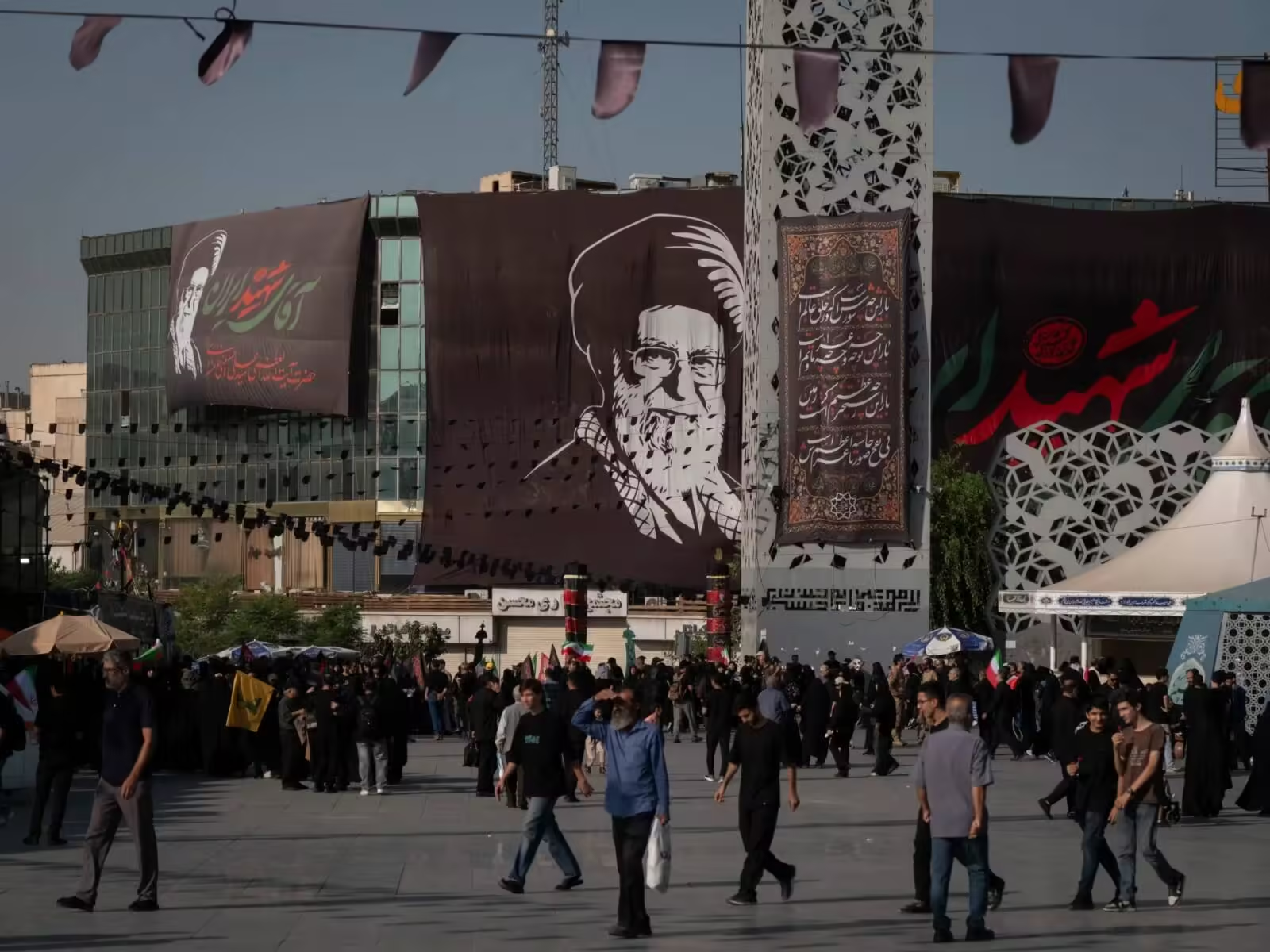
Before the February strikes, Iran’s government faced deep public anger after its deadly crackdown in January on nationwide protests against high inflation and the plummeting value of Iran’s currency. US-Israeli attacks subsequently killed Khamenei, who had ruled since 1989, and security chief Ali Larijani. But they did not topple the Islamic Republic.
Khamenei’s son Mojtaba succeeded him. His elevation and the influence of the IRGC has reinforced the position of hardliners within the government.
Coningham cautioned that the absence of demonstrations during a war should not be interpreted as support for the government.
“While the conflict had produced a rallying effect around resistance to foreign attacks, that did not mean Iran had emerged stronger,” he said.
In the US
Meanwhile, Trump faces much tougher political pressure before any renewed strikes. His approval rating has fallen from 40 percent in a Reuters/Ipsos poll reported days before the war began to just 31 percent in a survey released on Monday – the lowest recorded by the pollster across either of Trump’s presidential terms – amid frustration over high petrol prices and the deep unpopularity of the war on Iran among Americans.
How has the economic balance changed?
In Iran
Iran’s economy was already struggling before the war, weighed down by sanctions and assets frozen abroad. The conflict has deepened those pressures as the US combines military force, more sanctions and a naval blockade to squeeze the country further.
In April, Iran’s government estimated the direct and indirect damage from US-Israeli attacks at $270bn. The pressure intensified in late August when Washington launched Operation Economic Outcastseeking to isolate Iran from international trade by imposing penalties on those doing business with it.
Official figures showed Iran’s gross domestic product contracted by 10.1 percent year-on-year from March 21 to June 20. Energy exports have been severely curtailed by the US blockade while the rial has plunged in value.
In the US
The US has also incurred substantial costs. In September, the Congressional Budget Office estimated that the conflict had cost the Department of Defense $38bn as of August 1. It said continued operations were expected to cost about $2bn to $3bn a month, depending on the intensity of fighting.
As a result of the additional costs of the war, US government debt surpassed a record $40 trillion in August – two years before it had been expected to reach that level.
How has the military balance changed?
For the US
While the US has demonstrated its ability to strike deep inside Iran, that destructive capacity has not brought down Iran’s political system nor has it finished off Tehran’s ability to retaliate with strikes on US assets and energy infrastructure in neighbouring countries.
Coningham said the difficulty for Washington is “translating military superiority into strategic results”. He also described recent troop redeployments as possible military posturing, but he added that the deployments do represent a shift from earlier efforts to reduce the US military footprint in parts of the region.
US media reports suggested there is now a severe shortage of weapons in the US arsenal in the Middle East as expensive defensive missiles have been depleted against a bombardment of cheap Iranian drones.
Fox News reported that the USS Theodore Roosevelt aircraft carrier and the 13th Marine Expeditionary Unit were expected to reach the Middle East by the end of November, bringing about 10,000 military personnel. The deployment would expand Trump’s military options as he weighs further action.
For Iran
Coningham said, for Iran, the conflict fits a longstanding narrative of resistance against what its leadership portrayed as US and Israeli colonialism and imperialism.
Since February 28, the IRGC has demonstrated its skill at “asymmetric warfare” as it has held off expensive US military might with cheap, mass-produced drones.
Furthermore, its use of “decentralised structures” has allowed it to continue operating despite disrupted communications and the loss of senior decision-makers, Coningham said.
US strikes have severely damaged Iran’s navy and increased its reliance on smaller vessels, including speedboats used in recent attacks in the Strait of Hormuz. On that front, geography is on Iran’s side as it can fire at ships in the Strait of Hormuz from ground positions along its coast. It can also place sea mines in the strait using rockets to drop them.
These are tactics the US had not necessarily expected to contend with when it initiated the strikes on Iran but will certainly face now.

How has global trade changed?
A mounting global energy crisis was not on the cards in February, but it is certainly looming now.
Disruptions to Gulf energy supplies caused by the war and fears of further escalation have pushed oil prices sharply higher. Brent crude, the global benchmark for oil prices, settled at $72.48 a barrel on February 27, the day before the war began.
It hit $126.41 on April 30, its highest level in four years. By early trading on Friday, it stood at $114.47.
But the crisis extends beyond crude oil. Damage and disruptions to fuel production in the Middle East alongside sanctions on Russian supplies have tightened diesel markets while the global supply of liquefied natural gas has also been heavily affected. The International Energy Agency warned in October that supply constraints could persist well into 2027.
Diesel, which has doubled in price in the US, is a big problem for Trump because farmers and businesses in the US, key voting blocs for him, rely on it for production and transport.
Alternative ports, pipelines and ship-to-ship transfers have helped Gulf producers restore exports but at higher logistical costs and with continuing exposure to attacks.
Re-establishing shipping through vital waterways in the Middle East, therefore, has now become a primary objective in the war.
Source: www.aljazeera.com